A broker surety bond, filed with the FMCSA on Form BMC-84, is a $75,000 financial guarantee that a licensed freight or auto transport broker must maintain to hold operating authority. It protects carriers and shippers from a broker's failure to pay what it owes. It is not insurance on your vehicle and it does not cover transit damage.
Since 2013, federal law has required property brokers and freight forwarders to maintain $75,000 in financial security. Two forms satisfy it: The bond exists because brokers hold other people's money. A broker collects a customer payment, dispatches the load to a carrier, and owes that carrier its rate. When brokers fail — and in freight downturns they do — carriers who hauled loads and never got paid file against the bond. Shippers who paid a broker for service never rendered can also file.
The bond is a shared pool. If a broker collapses owing $400,000 across dozens of carriers, all of them file against the same $75,000, and claimants are paid pro rata. Recovery is often cents on the dollar. Enforcement is real: if the surety cancels the bond, FMCSA revokes the broker's operating authority. You can check whether a company's bond is active in the FMCSA Licensing and Insurance system using its MC number.
The BMC-84 is the single most misrepresented document in auto transport marketing. "Fully bonded and insured" appears on hundreds of broker websites, and consumers read "bonded" as protection for their car. It is not. Here is the actual division: A broker can be perfectly bonded and still leave you with zero recourse for a scratched door, because the broker did not touch your car. The bond's presence tells you the company is a broker — carriers do not file BMC-84s, they file cargo and liability coverage.
That is genuinely useful information at booking time. If a company advertises a $75,000 bond, it is a broker. Nothing wrong with that — a good broker with a solid carrier network is the right answer for a one-off cross-country move on a lane nobody runs regularly. But if you are shipping New Hampshire to Florida in October, you want the company that owns the truck. See broker vs carrier.
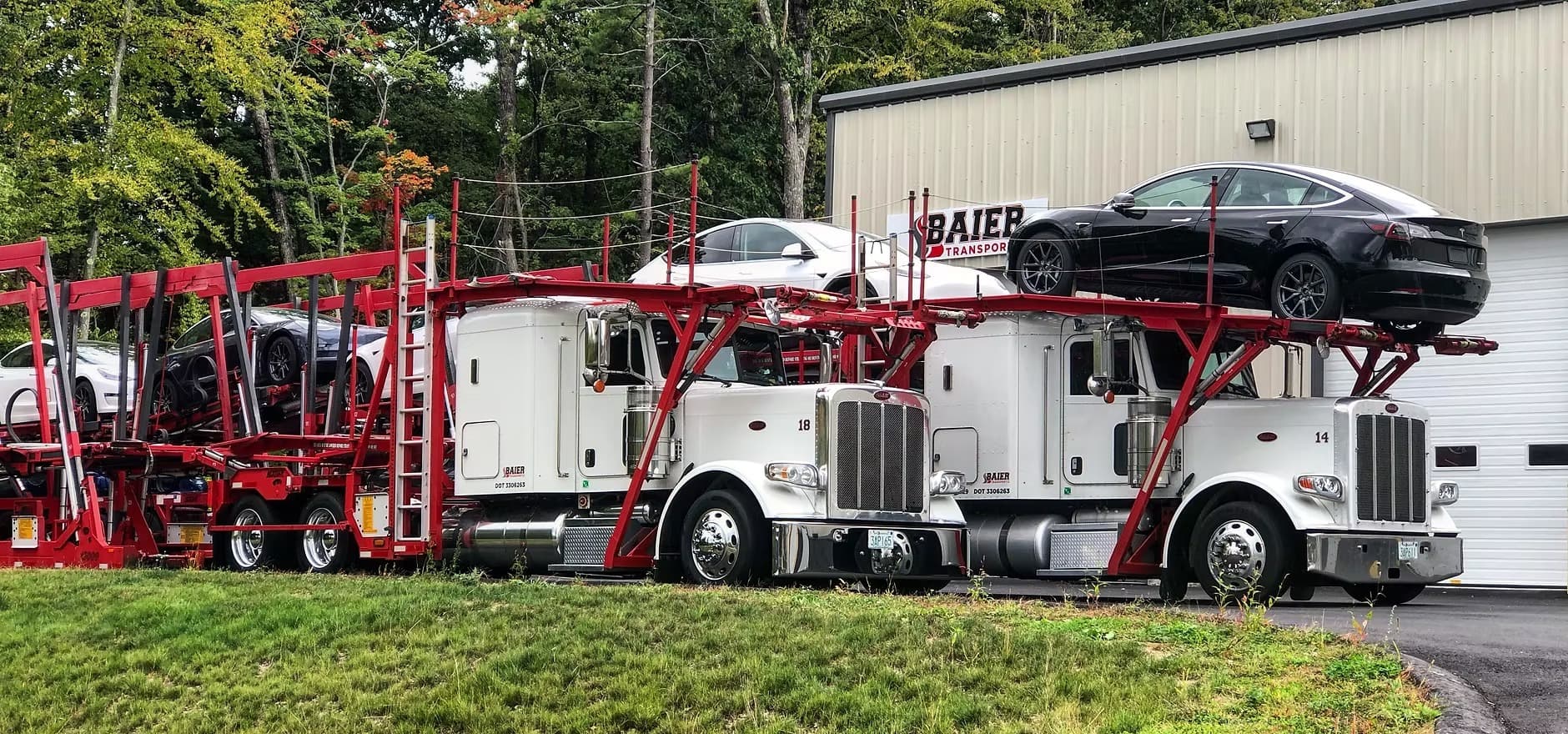
Reading "bonded" as "insured." They are unrelated protections. A $75,000 bond covers financial defaults across every load that broker touches nationwide; cargo insurance covers physical damage to your specific vehicle on a specific truck. The other mistake is assuming the bond amount is meaningful in size. $75,000 sounds substantial until you consider that a mid-size broker moves thousands of loads a year. Against a real failure, the bond covers a small fraction of the exposure. Do not let it substitute for verifying the actual carrier's insurance. Baier Transport LLC is an owned-fleet carrier, not a broker. We do not file a BMC-84 because we do not hand your car to somebody else — our drivers and our trucks run the Northeast-to-Florida lane. Get a quote and ask us for our cargo coverage instead.