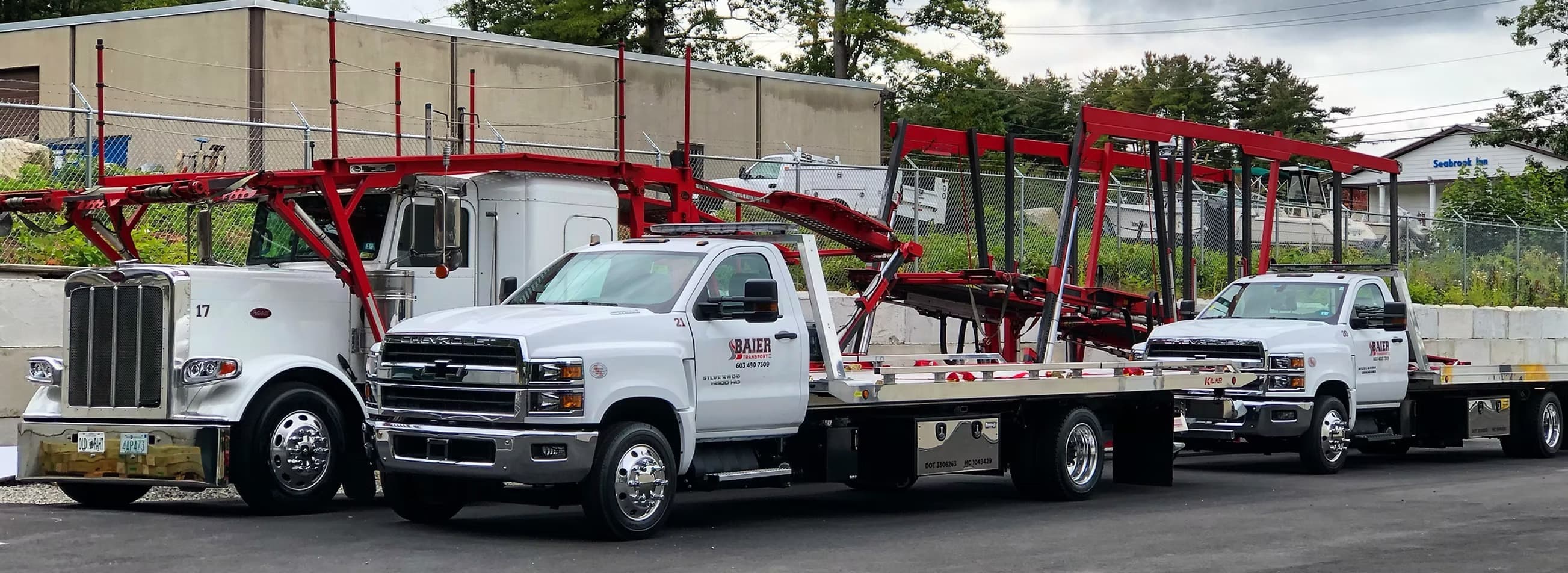
Operating authority is the legal permission FMCSA grants a company to transport regulated cargo, or arrange its transportation, for hire across state lines. It is issued as a numbered registration — the MC number — and it specifies what the holder may do: haul freight, broker it, or forward it. Without it, a company cannot legally move your car. The type of authority a company holds is the cleanest public answer to "are you a broker or a carrier?" A company applies through FMCSA's Unified Registration System, pays a filing fee per authority type, and waits out a protest period. Authority is not granted until two conditions are met.
Insurance is filed. For a motor carrier of property, that is a minimum of $750,000 in public liability, filed by the insurer directly with FMCSA on a Form BMC-91 or 91X. For a broker, it is a $75,000 surety bond (BMC-84) or trust fund. If the insurer cancels, the filing drops and the authority goes inactive automatically — nobody has to catch it manually.
Process agents are designated. A Form BOC-3 naming an agent for legal service in every state the company operates in. The three types you will encounter in auto transport: A company may hold more than one. A carrier with both authorities can haul what fits its trucks and broker the rest — which is legal, common, and worth asking about, because it means some of your quote may end up on a load board.
Authority also carries obligations: biennial updates, safety compliance, and record-keeping. Fall out of compliance and FMCSA can revoke it. Authority type determines who is legally responsible for your vehicle. Under carrier authority, the company is the responsible party from pickup to delivery. Its cargo policy responds. Its name is on the bill of lading. Its safety record is the one your car rides on. Under broker authority, the company's obligation is to arrange transportation. If the assigned carrier damages your vehicle, the claim goes to that carrier's insurer, not the broker's — and the broker's $75,000 bond exists mainly to protect carriers from nonpayment, not to make you whole.
Active status matters just as much as type. Inactive authority almost always means a lapsed insurance filing. A vehicle moving under revoked authority is a vehicle moving without confirmed coverage. Customers ask "are you licensed and insured?" and accept "yes." Every broker can truthfully say yes. The question that separates them is: what type of authority do you hold, and what is your MC number?
Then check it. Pull the SAFER Company Snapshot and read Entity Type. Carrier means trucks. Broker means no trucks. Both means ask which one applies to your load. The other mistake is confusing state authority with interstate authority. A company may be perfectly licensed to operate within one state and have no federal authority at all. If your car is crossing a state line, federal authority is the one that matters. Our broker vs carrier guide walks through the verification. Baier Transport LLC holds motor carrier authority under USDOT 3306263 and MC-1049429. We own the equipment and employ the drivers who move your vehicle on the Northeast-to-Florida corridor. 251,015+ vehicles transported, BBB A+ rated, headquartered in Seabrook, New Hampshire.