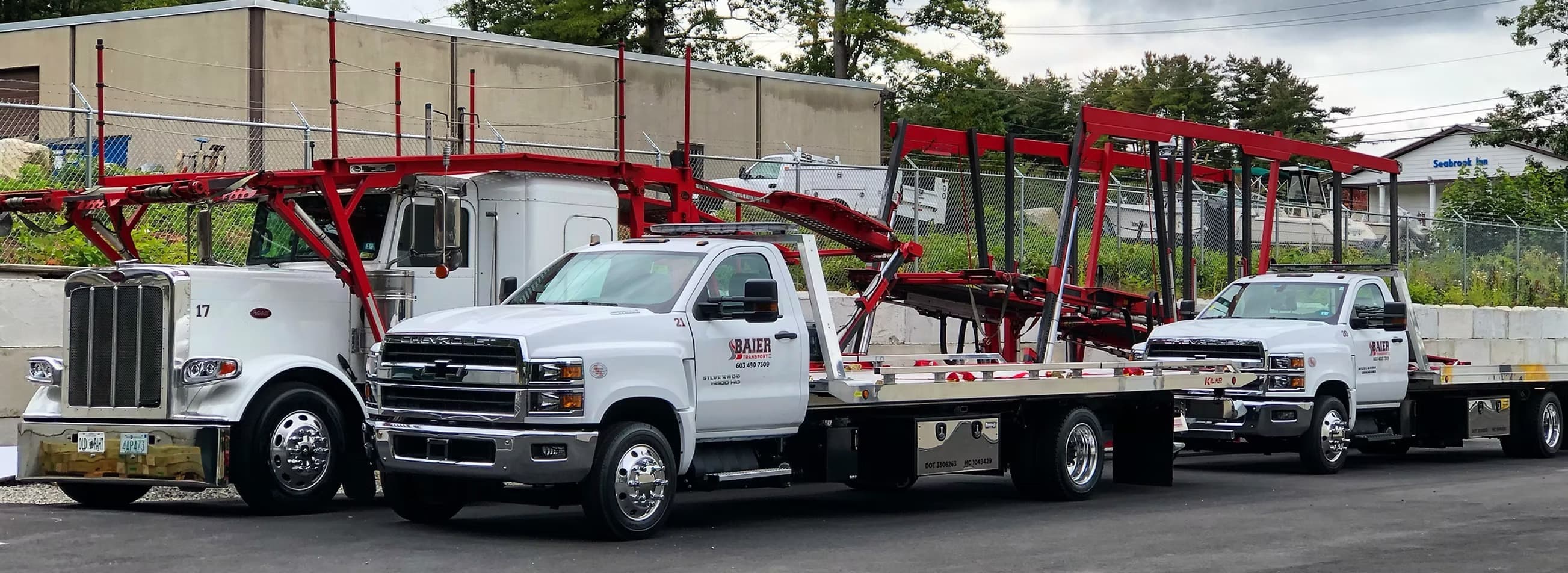
An owner-operator is a truck driver who owns the truck they drive and runs it as their own business. In auto transport, owner-operators typically run one or two rigs, hold their own operating authority or lease onto a larger carrier, and find work by taking loads off a load board rather than from booked freight.
They are the backbone of the industry's capacity — and the party most often on the other end of a broker's posting. An owner-operator either has their own FMCSA authority or operates under someone else's. Independent authority. The driver holds their own MC number and USDOT number, carries their own liability and cargo insurance, and books loads directly, almost always from a load board. They are a one-truck motor carrier. Every business cost — the truck note, fuel, insurance, tires, maintenance, and downtime — is theirs.
Leased on. The driver owns the truck but runs under a larger carrier's authority, insurance, and DOT compliance program, taking a percentage of the load revenue. This is common and perfectly legitimate. It also means the "carrier" you booked with may not employ the person driving your car.
The economics shape behavior. A tractor and a 9- or 10-car Cottrell-style trailer is a serious capital commitment, and financing payments do not pause for empty miles. That is why owner-operators are ruthless about deadhead and why they chase loads heading toward home. It is also why a single owner-operator's schedule can change fast: one breakdown, and there is no second truck to cover the run. Many of the best car haulers in the country are owner-operators with decades of experience. The variable is not skill. It is redundancy. If your vehicle ends up with a one-truck operator, your shipment is riding on one truck, one driver, and one insurance policy.
That is often fine, and sometimes ideal. A single operator handling your classic car door to door gives you one person who is accountable and personally invested. For enclosed and specialty work, this is a real advantage. The exposure is capacity. If that truck breaks down in Virginia, there is no backup unit. Your car waits, or the broker re-posts it and starts over. A fleet with 15 to 20 trucks running the same corridor can move your vehicle to another truck the same week. The other thing to check is coverage. Ask for the certificate of insurance and confirm the cargo limit covers your vehicle's value — a single-truck policy might cap at a figure below the total value of a full trailer. Our insurance explainer covers what to look for.
The mistake is assuming that the company you booked with employs the driver. Many mid-size carriers run entirely on leased owner-operators. The name on the trailer is the authority; the person driving works for themselves. Ask two questions: is the truck company-owned, and is the driver a W-2 employee? Both matter for training standards, drug-and-alcohol program compliance, and whose insurance responds if there is damage. The 9-point checklist has the rest. Baier Transport is owner-operated by Jay Baier — but we are a fleet, not a single truck. Company-owned equipment, company drivers, and a dispatch operation running the Northeast-to-Florida corridor out of Seabrook, New Hampshire. 251,015+ vehicles moved. BBB A+ rated.