A load board is an online marketplace where brokers and shippers post freight — in auto transport, individual vehicles — and carriers browse and accept the loads that fit their routes. It functions as the industry's spot market: the posted carrier pay rises and falls with supply and demand on each lane, in real time. If you booked your car shipment with a national broker, there is a very good chance your vehicle spent time as a line on a load board. The dominant board in auto transport is Central Dispatch, with Super Dispatch and a handful of smaller platforms competing for the same traffic. All of them require FMCSA operating authority and a paid subscription, so consumers cannot see them.
A posting is short: origin and destination ZIPs, vehicle details, operable or not, open or enclosed, first available date, and the carrier pay. Carrier pay is the number that matters. It is what the driver gets, and it is always less than what the customer paid the broker. A carrier dispatcher filters the board by origin, destination, and rate, then does arithmetic. A 10-car open trailer running Boston to Orlando burns roughly 1,300 miles of fuel, driver hours, tolls, and equipment cost. The dispatcher needs the average per-unit pay across the whole load to clear that, and needs the pickups clustered tightly enough that collection does not eat two extra days.
Loads that price above market get accepted in minutes. Loads that price below sit — sometimes for a week — until the poster raises the rate. That repricing is the load board doing its job, and it is invisible to the customer whose "guaranteed" pickup date is quietly passing. Seasonality moves these numbers hard. On the Northeast-to-Florida corridor, southbound carrier pay climbs from October through January as snowbird volume peaks, then inverts in March through May when the reverse migration starts and northbound capacity gets scarce. The load board is the reason a broker cannot truly guarantee your price or your date. Both are set by a market the broker does not control.
When you accept a broker quote, you are accepting a prediction: that a carrier will take this load, at this rate, in this window. If the prediction is wrong, one of three things gives — the date, the price, or your patience. It also explains why the cheapest quote is frequently the slowest. Underpriced loads are simply skipped by every dispatcher scrolling the board. Our breakdown of how per-mile pricing actually works shows what a realistic rate looks like on real corridors.
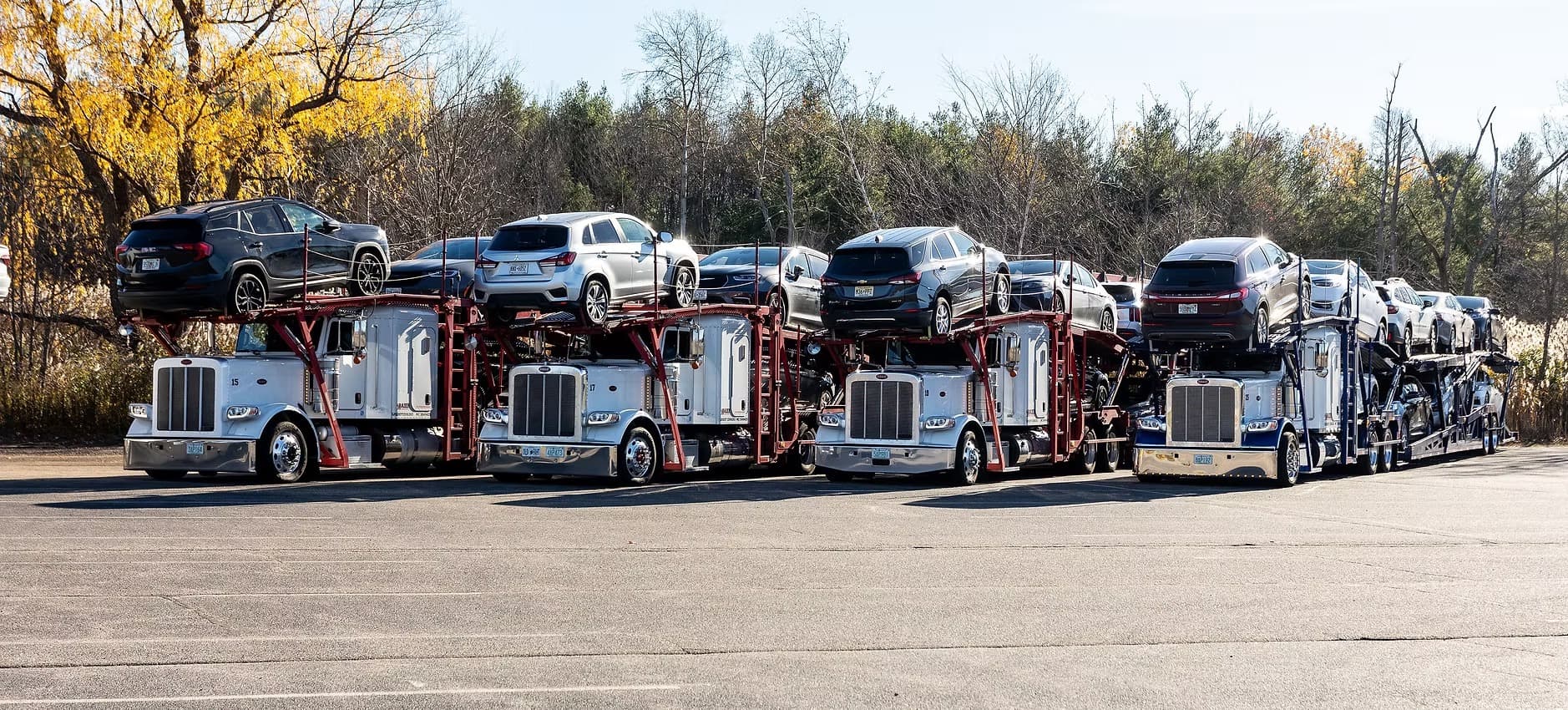
Booking direct with a carrier removes the board from the equation. The truck is already scheduled for the lane; your car is added to a run, not auctioned. Customers assume the quote they accepted is the money the driver is getting. It is not, and the gap is not disclosed. A $1,200 quote might be posted at $900 carrier pay. If $900 does not cover that lane, the load stalls, and you find out only when nobody shows up.
The other mistake is shopping on price alone across five broker quotes. All five are pricing the same load board. The outlier low bid is not a better deal — it is a worse guess. Use our 9-point checklist instead. Baier Transport does not post customer vehicles for bidding. We own the trucks, employ the drivers, and run the Northeast-to-Florida corridor on a schedule — 251,015+ vehicles moved, BBB A+ rated, based in Seabrook, New Hampshire. 2026-27 snowbird booking is open. Get a quote or view our routes.