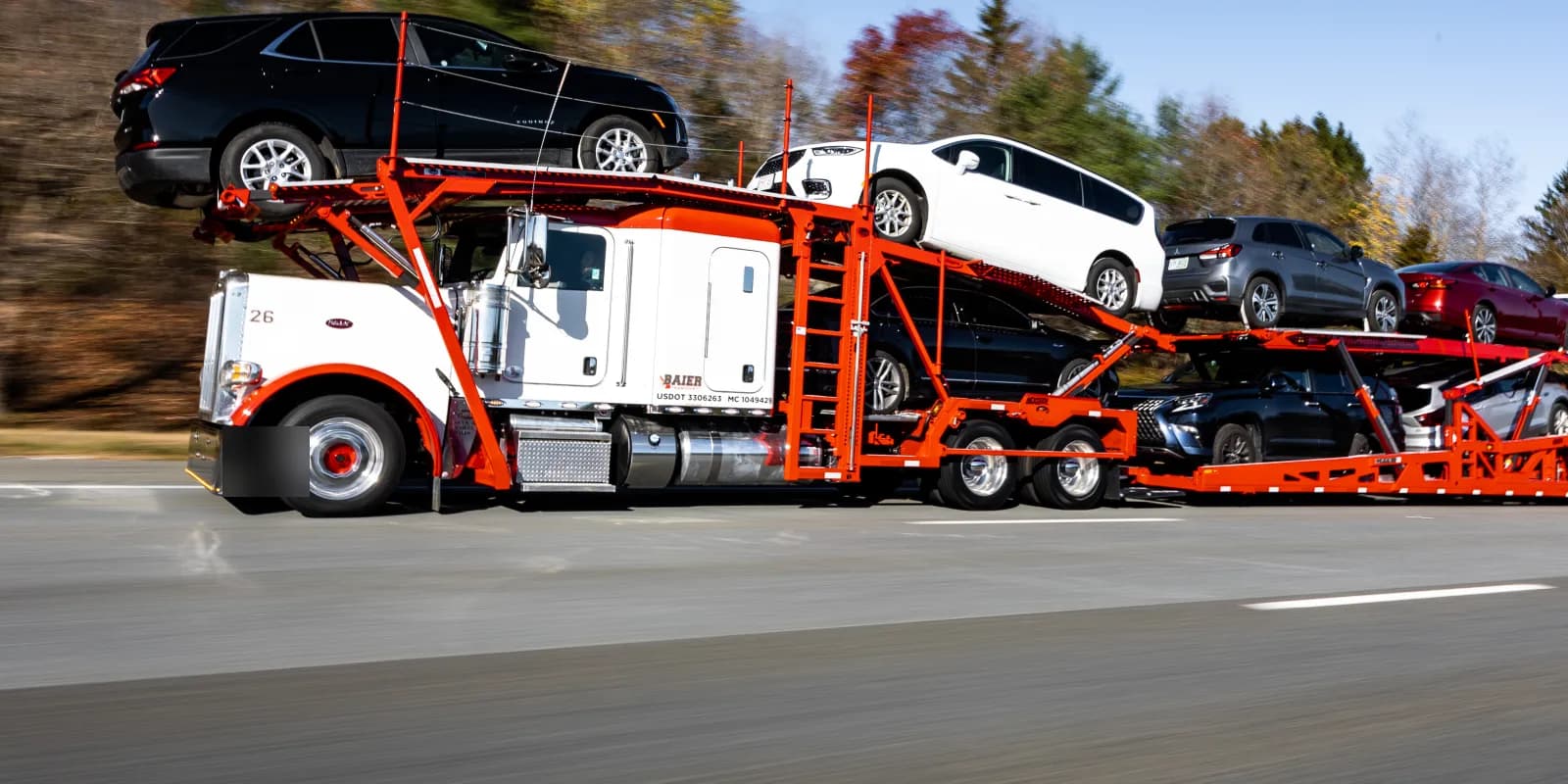
Deadhead means driving a truck empty — miles covered with no paying freight on board. In auto transport it happens when a driver travels out of route to reach a pickup, or when a trailer returns from a delivery with nothing to haul back. Those empty miles still cost fuel, wages, and wear, so a customer pays for them. Deadhead is the hidden variable behind almost every "why is this route so expensive?" question in car shipping. A truck earns money only when vehicles are on it. Every empty mile is pure cost: fuel, tires, driver hours, insurance, and depreciation, with zero revenue. Two kinds show up in auto transport. Deadhead to pickup. A driver finishing a delivery in Orlando gets a load offer 120 miles away in Sarasota. Those 120 miles are unpaid. The driver only takes it if the load pays enough to absorb them, which is why a dispatcher filters the load board for pickups clustered near where the truck already is.
Deadhead on the return leg. This is the big one, and it is directional. The Northeast-to-Florida corridor runs heavily southbound from October through January as snowbirds head down. Trucks that arrive full in Miami need something to carry north. If northbound freight is thin, the return runs empty and the southbound rate has to cover the entire round trip. In March through May the flow inverts. Northbound demand spikes with the reverse migration, southbound goes soft, and the pricing follows. Same lane, same mileage, opposite economics. This is the mechanic behind lane imbalance. A round trip is roughly 2,900 miles between New England and South Florida whether or not there is freight in both directions. The only question is how many paying vehicles share the cost.
Deadhead is why identical distances quote differently and why your per-mile rate moves with the calendar. If your shipment runs in the heavy direction during peak season, you benefit — the truck is full both on your leg and, if the carrier has return volume, on the way back. If you ship against the flow, or in a shoulder period, your load may be carrying a share of empty miles.
It also explains why remote pickups cost more. A truck sent 90 miles off a corridor to collect one car burns 180 unpaid miles round trip. That is not a surcharge invented to annoy you; it is the actual cost of reaching your address. And it explains flexibility discounts. If you can move your date to when a truck is already coming through, you are not paying for anyone's empty miles. See how per-mile pricing actually works for the full picture.
The mistake customers make is comparing two quotes on distance alone. Boston to Miami and Miami to Boston are the same 1,500 miles and can price very differently, because in October one direction is full and the other is fighting for freight. The mistake carriers and brokers make is pricing a lane without a plan for the return. That is exactly when a load sits on the board unclaimed and a "guaranteed" pickup date quietly slips.
The practical move for snowbirds: book the round trip. Locking your spring return at the same time you book the fall trip gives the carrier a known northbound load, which is worth real money to them — and it means you are not shopping in March when everyone else in Naples is. Details in shipping your car back north. Baier Transport runs the Northeast-to-Florida corridor in both directions with our own fleet out of Seabrook, New Hampshire — southbound for the season and northbound for the spring return. Booking both legs now locks your dates and keeps our trucks loaded, which is how the price stays sane. Snowbird pre-booking for 2026-27 is open. Get a quote or see the Florida to New England lane.