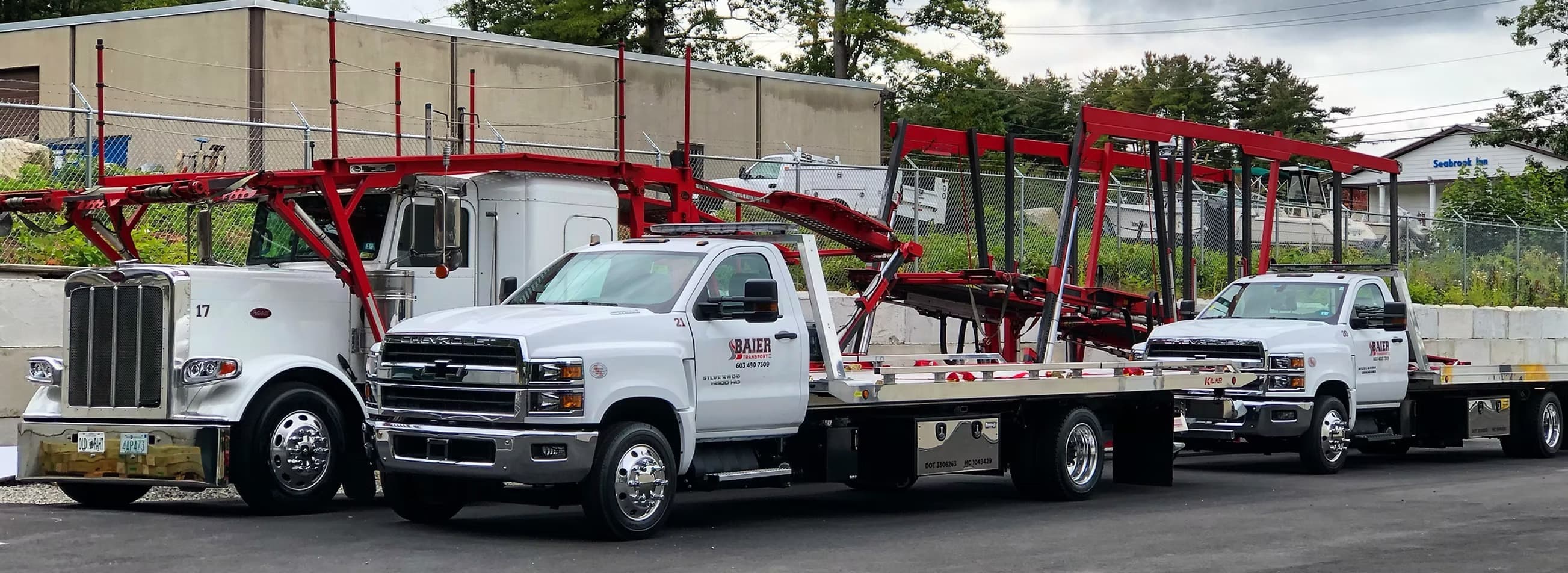
A dispatcher is the person at a trucking company who decides which vehicles go on which truck, in what order, and on what schedule. In auto transport, the dispatcher accepts or declines loads, builds the route, assigns the driver, and manages the pickup and delivery windows customers actually experience. They are the operational center of a carrier. Nothing about your shipment date is decided by a salesperson. It is decided here. A dispatcher's job is a routing puzzle with a fixed number of slots. An open car hauler holds 7 to 10 vehicles; an enclosed rig holds 2 to 6. Every slot has to earn its keep.
Building a southbound New England to Florida run, the dispatcher assembles a full trailer from booked orders — say four in New Hampshire and Massachusetts, three around Hartford and New Haven, three more in the New York metro area — sequenced so the truck loads in a straight line toward I-95 rather than backtracking. Vehicles are also loaded in reverse delivery order, so the first car off in Miami is not buried behind five others going to Naples.
The dispatcher also weighs the trailer. A load of full-size SUVs and pickups hits legal weight limits before it fills all ten slots, so heavy vehicles get spread across runs. Then they manage the clock: driver hours-of-service limits, which cap daily driving, plus fuel stops, weather, and the loading time at each door. A Boston-to-Miami run is roughly 1,500 miles, typically 2 to 4 days of driving once the truck is loaded, with collection and delivery legs on either end.
At a broker, the "dispatcher" title means something different: that person works a load board, negotiating with outside carriers to cover loads. They assign nothing, because they schedule nothing. Your pickup window comes from the dispatcher's route, not from the date you typed into a form. When you book with an owned fleet carrier, the dispatcher can look at next week's runs and tell you truthfully which day a truck is in your area. That is a schedule. When you book with a broker, no dispatcher has your car yet — someone still has to accept it.
It also explains flexibility. If you can move your date by a day or two, a dispatcher can usually slot you onto a run that is already passing your street, which is cheaper and faster than building a trip around you. Rigid dates cost money in this business, and dispatchers price accordingly. During peak snowbird weeks in October and November, dispatch capacity is the binding constraint. Trucks are full. See when to book for the timing that gets you a good slot. The mistake is treating the pickup window as a customer service failure when it is a physics problem. A driver collecting nine other vehicles across four states cannot commit to 9:00 a.m. Tuesday at your door six weeks out — and any company that promises that is guessing.
The second mistake is not telling dispatch the truth about access. A 75-foot rig cannot enter most cul-de-sacs, gated communities, or low-clearance condo garages. If dispatch does not know, the driver arrives, cannot make the pickup, and you both lose a day. Say it upfront and the dispatcher will arrange a nearby meeting point — a shopping plaza lot is standard practice in door-to-door transport. At Baier Transport, our dispatchers schedule our own trucks and our own drivers out of Seabrook, New Hampshire. That is why we can give you a real window instead of an estimate. 251,015+ vehicles moved, BBB A+ rated.