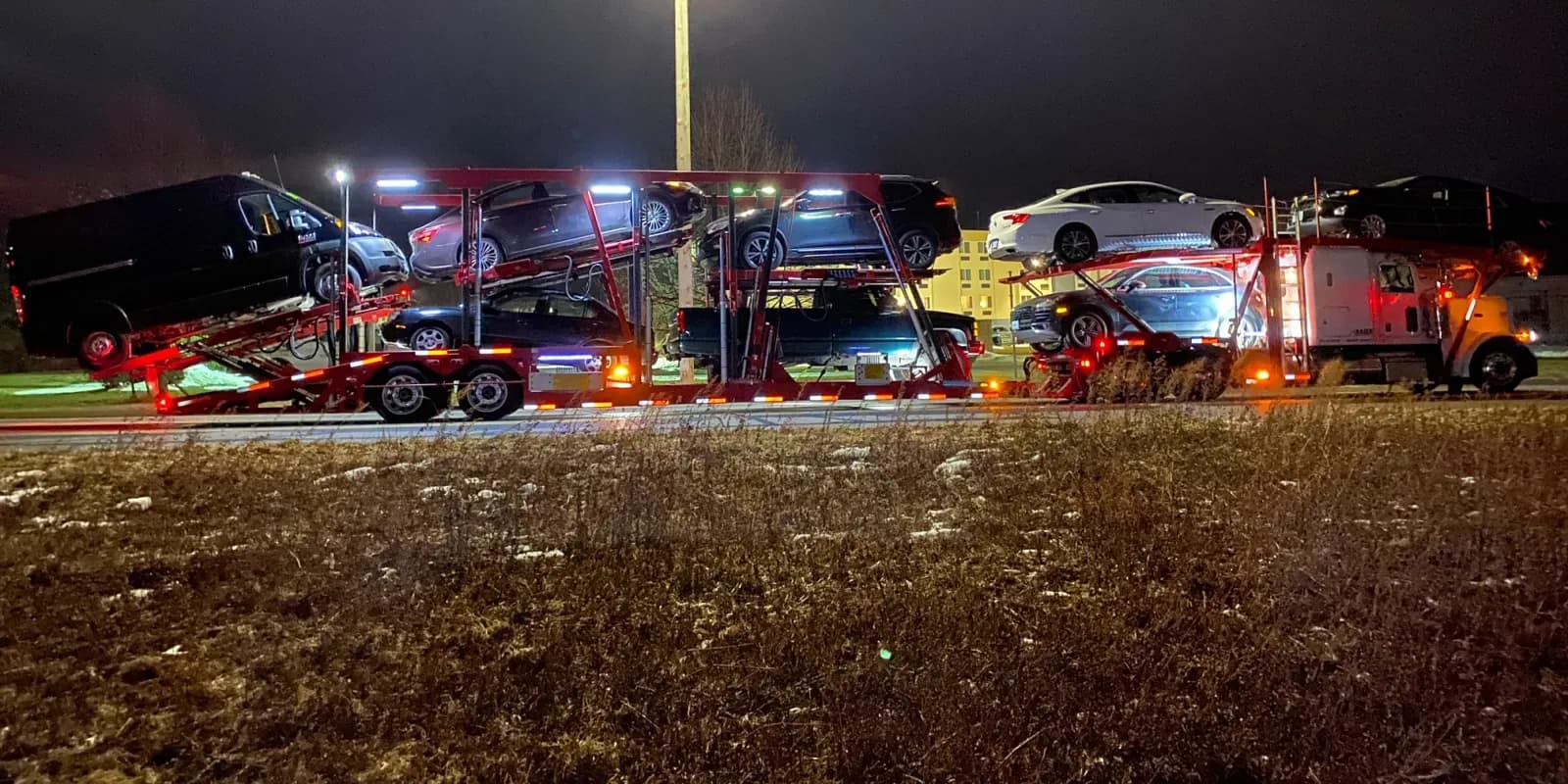
Expedited auto transport is priority service that gets your vehicle picked up faster — typically within 24 to 72 hours instead of a standard 2 to 7 day window. The premium buys a place at the front of the dispatch queue, or a dedicated truck. It does not make the truck drive faster; federal hours-of-service rules cap that at roughly 500 miles a day. That distinction is the whole term. Expedited compresses the wait, not the drive. Three different things get sold under this label. Know which one you are buying. Priority dispatch. Your load is prioritized on the next truck heading your direction. Pickup in 24 to 72 hours, transit unchanged. This is the most common form and the least expensive premium — often 20% to 40% over standard.
Dedicated truck. A single car transport or hotshot run with no other stops. Boston to Miami in 2 to 3 days instead of 5 to 7. Cost is typically 2 to 4 times standard. Team drivers. Two drivers alternating so the truck moves nearly around the clock. Rare in auto transport, common in freight. Cross-country in 3 days rather than 7 to 10. Priced accordingly.
The physics that never changes: a commercial driver may drive 11 hours within a 14-hour window, then must take 10 consecutive hours off. That is roughly 500 miles a day, no matter what you pay. Seabrook to Miami is about 1,500 miles — 3 driving days minimum for a solo driver, and that is with zero other stops. So an honest expedited timeline on the Northeast-to-Florida lane looks like: picked up tomorrow, delivered in 3 to 4 days. Anyone promising two days door-to-door with a solo driver over 1,500 miles is either using team drivers or telling you what you want to hear.
Typical expedited premiums run 25% to 60% above standard on priority dispatch, and considerably more for dedicated. Ranges vary by season, lane, and how much capacity is already committed. October through December on the snowbird corridor is the worst time to need a rush. Expedited is worth paying for when a date is genuinely fixed: a closing, a relocation start date, a military report date, an auction storage clock, a lease turn-in deadline. In those cases the premium is smaller than the cost of missing the date.
It is not worth paying for when you simply want the car gone. Standard service with a realistic first available date gets there for far less. The most important thing: only a carrier with its own trucks can actually commit. A broker selling expedited is selling a promise it will attempt to buy on a load board — which is why the industry's own FAQ pages explain at length why pickup dates cannot be guaranteed. We dispatch our own drivers out of Seabrook, so when we say a truck is leaving Thursday, we are reading a schedule.
Paying an expedited premium to a company that then has to find a truck. If nobody accepts the load at the quoted rate, you have paid extra for the same wait. Two questions before you pay: does your company own the truck, and is this a guaranteed pickup date with something behind it or a target? See broker vs. carrier. The second mistake is seasonal. If you need a car in Florida by Thanksgiving, book in September. Expedited in November on the busiest lane in the country is the most expensive way to solve a problem you could have avoided — see when to book. If you have a hard date, tell us the date first. We will tell you honestly whether our own trucks can hit it. Get a quote or call before you pay a rush premium somewhere else.