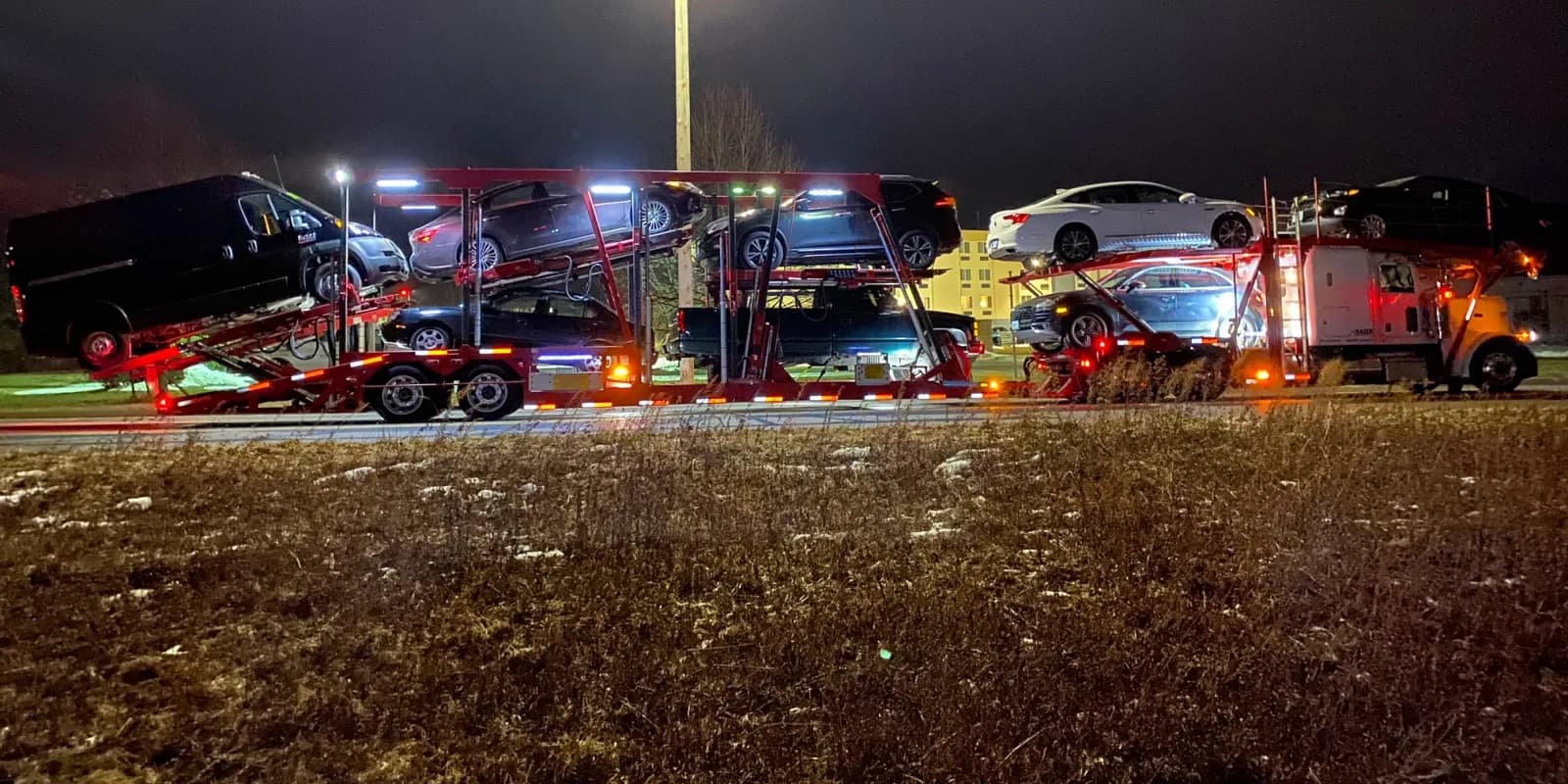
Transit time is the number of days your vehicle spends on the truck between pickup and delivery. It does not include the wait before pickup. Distance is the main driver, but federal hours-of-service limits, the number of stops on the load, and weather all shape the real number more than mileage alone.
A car hauler is not a delivery van. Drivers are governed by federal hours-of-service rules — broadly, a limited daily driving window and required rest — so a truck realistically covers something in the range of 400 to 550 miles a day once loading, fueling, inspections, and traffic are counted. Typical transit windows once a car is loaded: Seabrook, NH to Naples, FL is roughly 1,500 miles, which puts a typical run in the 3-to-5-day band. Boston to Miami is a similar profile. These are typical ranges and vary with season, routing, and weather. What actually adds days:
Transit time is separate from the wait for pickup. If your first available date is the 5th and the truck loads on the 9th, that is four days of scheduling plus your transit days. Total door-to-door elapsed time is the sum. Ask about both. Almost every scheduling problem in this industry comes from confusing transit time with total time. People book a shipment on the 1st, read "3 to 5 days," and plan to drive the car on the 6th.
Get the two numbers separately: when will it load, and how long will it be on the truck. Then plan from the back end. If you are flying to Fort Myers on the 20th and need the car within a couple days of landing, work backward — a 3-to-5-day transit on a truck loading around the 15th lands about right, and a truck loading the 19th does not.
Owned-fleet carriers can answer this more precisely than brokers, because we know which truck is running which route on which week. A broker quoting transit time is quoting an average, not a schedule. For lane specifics see Boston to Miami timing or the New Hampshire to Florida route page. Assuming the truck drives straight through. Customers do the math — 1,500 miles at highway speed is about 22 hours, so two days, right? No. One driver cannot legally run that, the truck has other cars to load and unload, and a fully loaded nine-car hauler is not making 70 mph up the grades.
The other mistake is booking travel plans against an estimate with no buffer. Build in two or three days of slack on either end, especially in December and January when weather is a genuine factor on this lane. If your deadline is truly immovable, that is what expedited transport exists for. We own the trucks running the Northeast-to-Florida corridor, so we can tell you which week a truck is on your lane and what your car's transit will actually look like. Seabrook, NH. BBB A+. 251,015+ vehicles moved. Get a quote with your dates.