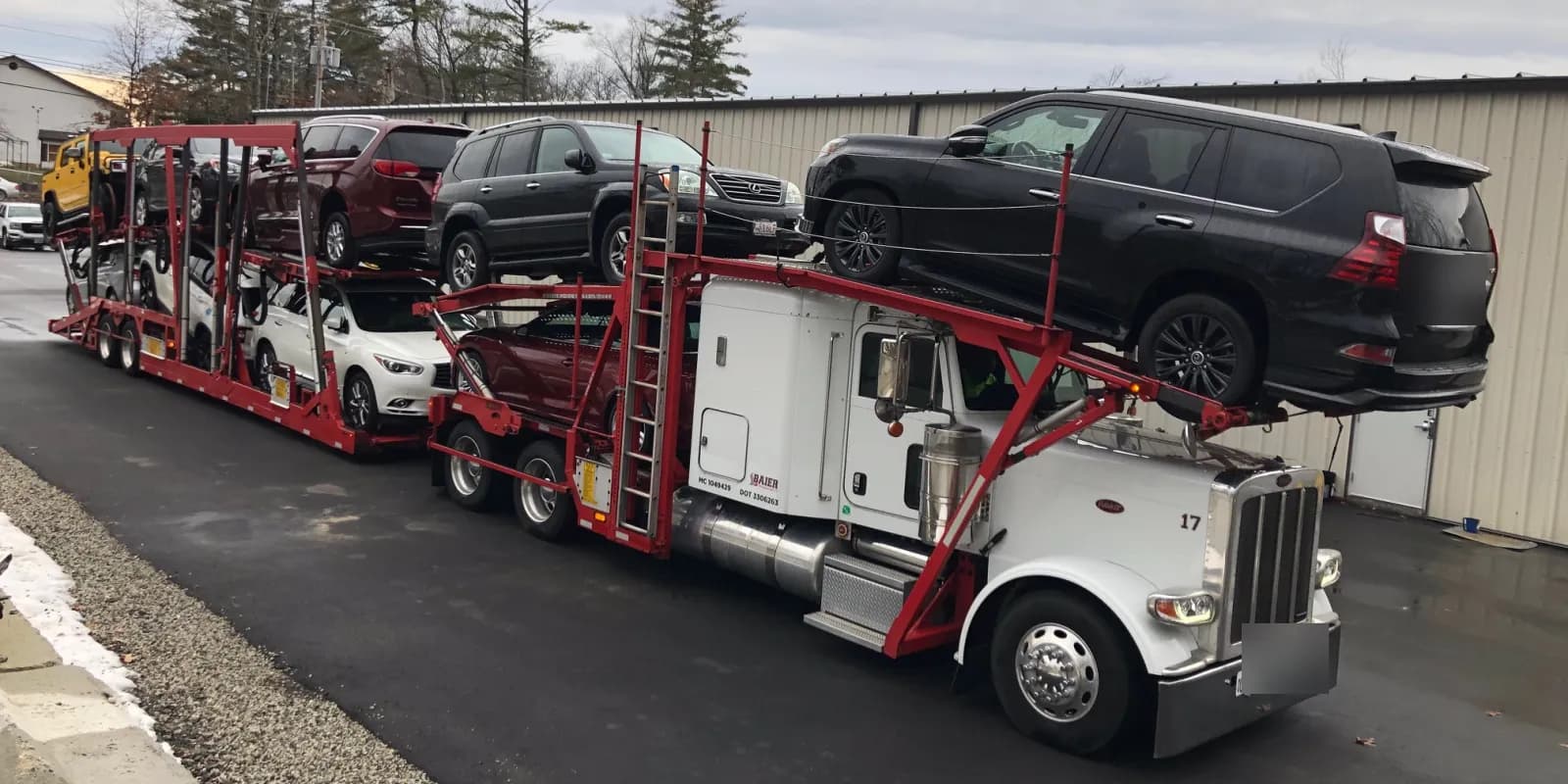
Top load means your vehicle rides on the upper deck of an open car carrier, with nothing above it. It protects against drips from vehicles overhead and reduces road spray from the highway, and carriers often charge a modest premium for it. It is a positioning request, not a different service or a different trailer.
An open multi-car carrier has two decks. The upper deck typically holds 4 to 5 vehicles; the lower deck holds the rest. Top load simply means you are asking for one of the upper positions. What that actually gets you: What it does not get you:
Typical premium: roughly $50 to $200 on a standard lane, when a carrier offers it at all. Some do not sell it separately. On a Northeast-to-Florida run, ranges vary by season and available equipment. Height is the hard constraint. Tall vehicles — full-size SUVs, lifted pickups, cargo vans — usually cannot go on the upper deck at all because of the trailer's overall 13.5-foot height limit. If you drive a Yukon XL, top load is often physically off the table.
Top load is a sensible middle option for a specific customer: someone with a nice but not irreplaceable car who does not want to pay 50% more for enclosed. A three-year-old Lexus, a well-kept convertible, a clean pickup with fresh paint — top load is a reasonable $100.
For a $200,000 classic, top load is not the answer. It is still an open trailer in the rain. Pay for enclosed — see classic and luxury car transport. Either way, document the car's condition on the vehicle inspection report at pickup. For a lease return, a commuter car, or the second car going to the Florida condo, save the money. Lower-deck positions are covered by the same cargo insurance and secured identically, and drip incidents are uncommon.
Paying a top-load fee to a company that cannot control loading order. A broker selling top load is selling a request it will pass along to a carrier it has not hired yet. Ask directly: is this a guarantee or a request, and what happens if the driver cannot accommodate it? A carrier dispatching its own trucks can look at the load plan and answer. If the answer is vague, do not pay for it. Ask us for top load and we will check the actual load plan for your run instead of taking a fee and hoping. Get a quote or read open vs. enclosed to decide which you really need.