An auto transport broker is a licensed middleman who sells you a car shipment and then hires a separate trucking company to actually move the vehicle. Brokers own no trucks and employ no drivers. They hold FMCSA broker authority, collect a fee from the price you pay, and pass the rest to the carrier who does the work. Most of the big national names advertising car shipping hold broker authority rather than carrier authority; some describe this plainly on their own site, others describe themselves differently, and some hold both broker and carrier authority — which is exactly why you should look the company up in the FMCSA SAFER database rather than take the marketing at face value. None of this is a scandal; brokering is a legitimate business model that works fine for some shipments. You just need to know which one you are buying.
You fill out a form and get a quote, usually within minutes. That number is not a contract with a truck — it is the broker's estimate of what it will take to get a driver to accept your load, plus their margin. Once you book, the broker posts your vehicle to a load board, most commonly Central Dispatch, where thousands of carriers shop for freight. Carriers see the posting and decide whether the money works for their route; if it does, a dispatcher accepts it and your car gets a truck, and if it does not, the load sits — at which point the broker either waits or calls you and asks for more money. That second call is the single most common complaint in this industry.
Broker margins typically run $150 to $350 per vehicle, though on long or difficult routes it can be more. Brokers are required to carry a broker surety bond (BMC-84), currently $75,000, which protects carriers from nonpayment, not you from a bad experience. Your car can also be re-posted: if the assigned carrier cancels, the load goes back on the board and a truck you never vetted picks it up. The broker model decides three things you care about: who touches your car, whether the price holds, and whether the pickup date is real. With a broker, your cargo insurance claim goes through the carrier's policy, not the broker's, and your pickup window depends on a stranger accepting a load board posting.
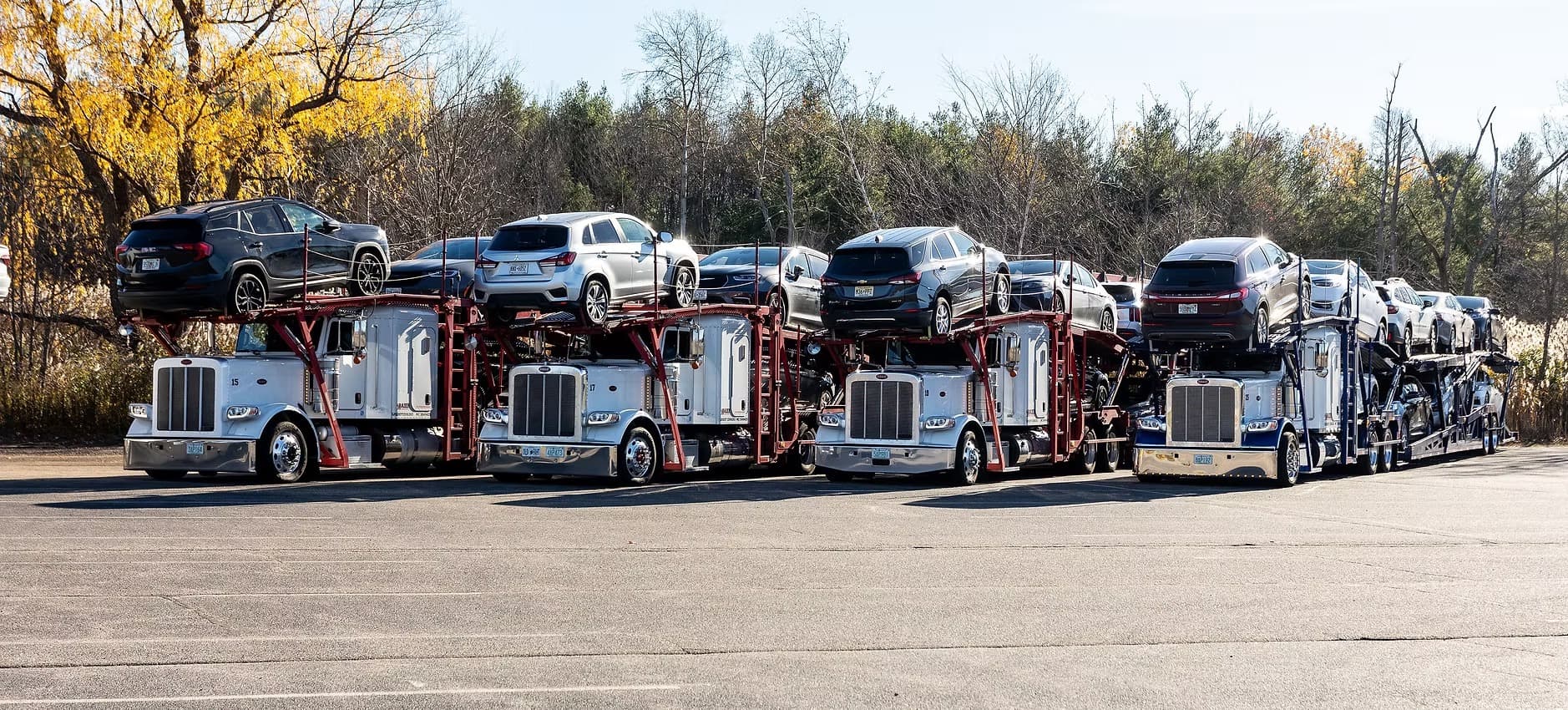
Brokers earn their keep on unusual routes — a one-off move to rural Montana, a cross-country relocation, a lane nobody runs regularly. Nobody has trucks everywhere, and if your shipment is genuinely off the beaten path, a good broker with a deep network beats a carrier who has to deadhead 600 miles to reach you. On a lane a carrier already runs every week, the broker adds a markup and a layer of uncertainty for nothing. The mistake is assuming the company on your quote is the company on the truck — phrases like "our carriers" and "our network" sound like ownership; they are not. A second mistake is treating a broker quote as a price rather than a bid: if it comes in dramatically below everyone else, that is often a lowball designed to win the booking, followed by a "market adjustment" call once your deposit is nonrefundable. Baier Transport is not a broker — we are an owned-fleet carrier based in Seabrook, New Hampshire, running our own trucks and drivers on the Northeast-to-Florida corridor, with 251,015+ vehicles moved and a BBB A+ rating.