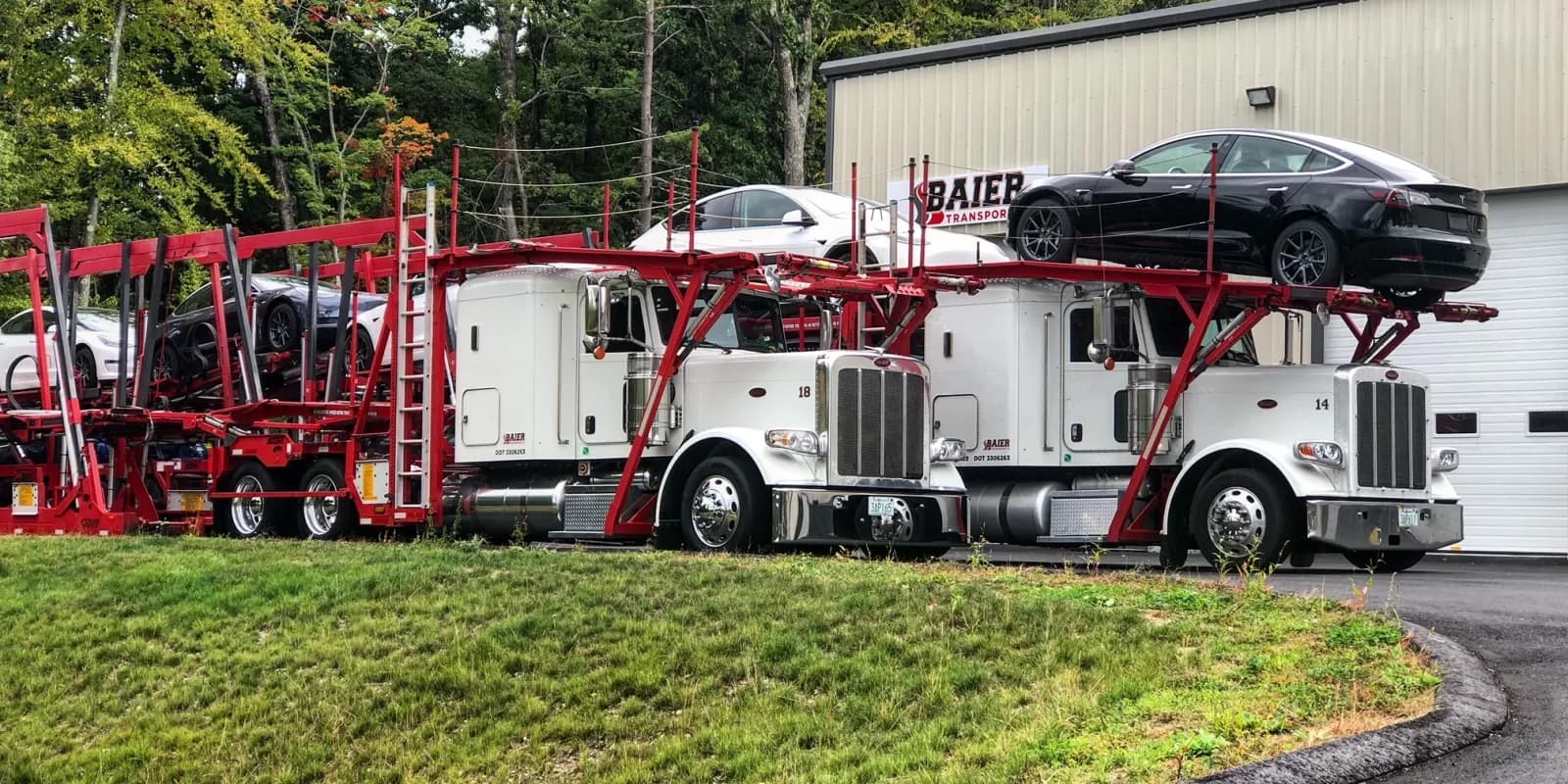
A car hauler is the truck and trailer combination built specifically to transport vehicles. The most common U.S. configuration is a semi tractor pulling a two-level open trailer carrying 7 to 10 cars, though enclosed haulers, stinger units, and flatbeds serve narrower needs. The equipment type determines your price and where the truck can physically reach you.
A full-size open multi-car carrier — the kind you see delivering to dealerships — runs about 75 to 80 feet long and 13.5 feet tall, and grosses up to 80,000 pounds. Trailers built by manufacturers like Cottrell, Boydstun, and Sun are hydraulic: decks tilt and lift so vehicles can be nested at angles, which is how ten cars fit in a space that logically holds six. Loading order is engineering, not preference — weight has to distribute across axles to stay legal at the scales, heavy vehicles go low, and cars are loaded in reverse delivery sequence so the first drop is not buried. A car assigned to the top load position rides on the upper deck, away from road debris and drips from vehicles above.
Securement in modern equipment is soft-tie: nylon straps over the tires rather than chains on the frame, which is what you want on anything with paint you care about. The dimensions decide your pickup location too — an 80-foot rig cannot enter a cul-de-sac, most gated communities, narrow historic streets, low-clearance parking garages, or a condo complex with a low entrance canopy. This is why door-to-door service means "as close to your door as the truck can legally and safely get" — meeting a driver at a nearby shopping plaza or big-box parking lot is standard, expected, and usually adds ten minutes to your day.
Capacity also drives price: ten cars on one trailer split the fuel, tolls, and driver hours ten ways, while two cars in an enclosed trailer split it two ways, which is most of why enclosed runs meaningfully higher than open.
The mistake is picturing a flatbed tow truck arriving in your driveway — customers plan around that image, then are surprised when the driver calls from a plaza a mile away. Tell dispatch about access before booking: gated entry, low branches over the street, tight turns, a steep driveway, a low-clearance garage. It costs nothing to say and saves a wasted pickup attempt. The second mistake is assuming low ground clearance is a non-issue — lowered cars, some sports cars, and modified vehicles cannot climb standard ramps without scraping, so say so up front and the carrier will assign a position with a shallower load angle or use race ramps. Baier Transport runs its own fleet of modern car haulers with soft-tie equipment and company drivers on the Northeast-to-Florida corridor, with 251,015+ vehicles transported and a BBB A+ rating.