Auto Transport for Dealerships: The Complete Operations Guide
Dealership transport is a different game than retail. You're moving inventory at volume, on tight margins, with auction deadlines and customer delivery promises on the line.
This guide covers how a dealership's transport should be set up: what to ask for, where money leaks out, how auction and dealer-trade moves actually run, and the paperwork that protects you when something goes wrong.
What you'll learn
- Volume transport belongs on a contracted rate sheet, not on spot prices booked one car at a time Group units headed the same way: an open carrier holds 7 to 10 vehicles Condition reports at pickup and delivery are your protection, so make them a habit for every unit
What dealerships actually need
- Predictable lane pricing — not spot rates
- Multi-vehicle loads — pay per unit, not per trip
- Auction-to-lot direct lanes (Manheim, ADESA, Copart, IAA)
- Net terms (typically NET-30)
- A single dispatch contact, not a different driver every week
Each of these is about the same thing: making transport a planned cost instead of a surprise on every deal jacket.
Where most dealers lose money
- Spot booking — paying retail rates on regular lanes adds up fast.
- Single-vehicle moves when 3 cars could ride together.
- Inoperable surcharges that weren't budgeted into wholesale pricing.
- Weekend pickup premiums on auctions that close Friday.
A dealership running 50+ units a month should be on a contracted lane sheet with predictable pricing and a dedicated dispatcher. Anything else is leaving 8–15% on the table.
Setting up a dealer account
At Baier, a dealer account starts with a short conversation about your operation. Share your usual lanes, your monthly volume and your vehicle mix, and we build a custom rate sheet within 24 hours. Underneath that sheet, the price of each move comes from a rate card driven mainly by distance, then adjusted for vehicle size, open or enclosed equipment, and how firm the pickup date is. That's why a rate sheet built on your real lanes is more predictable than a fresh quote for every car.
Qualified dealerships can also get NET30 terms. You complete a short credit application, and once it's approved, shipments are billed on NET30 with one consolidated invoice at the end of each month. No deposit on every move and no card on file for each car, just billing that fits your accounting cycle.
Group units that are going the same way
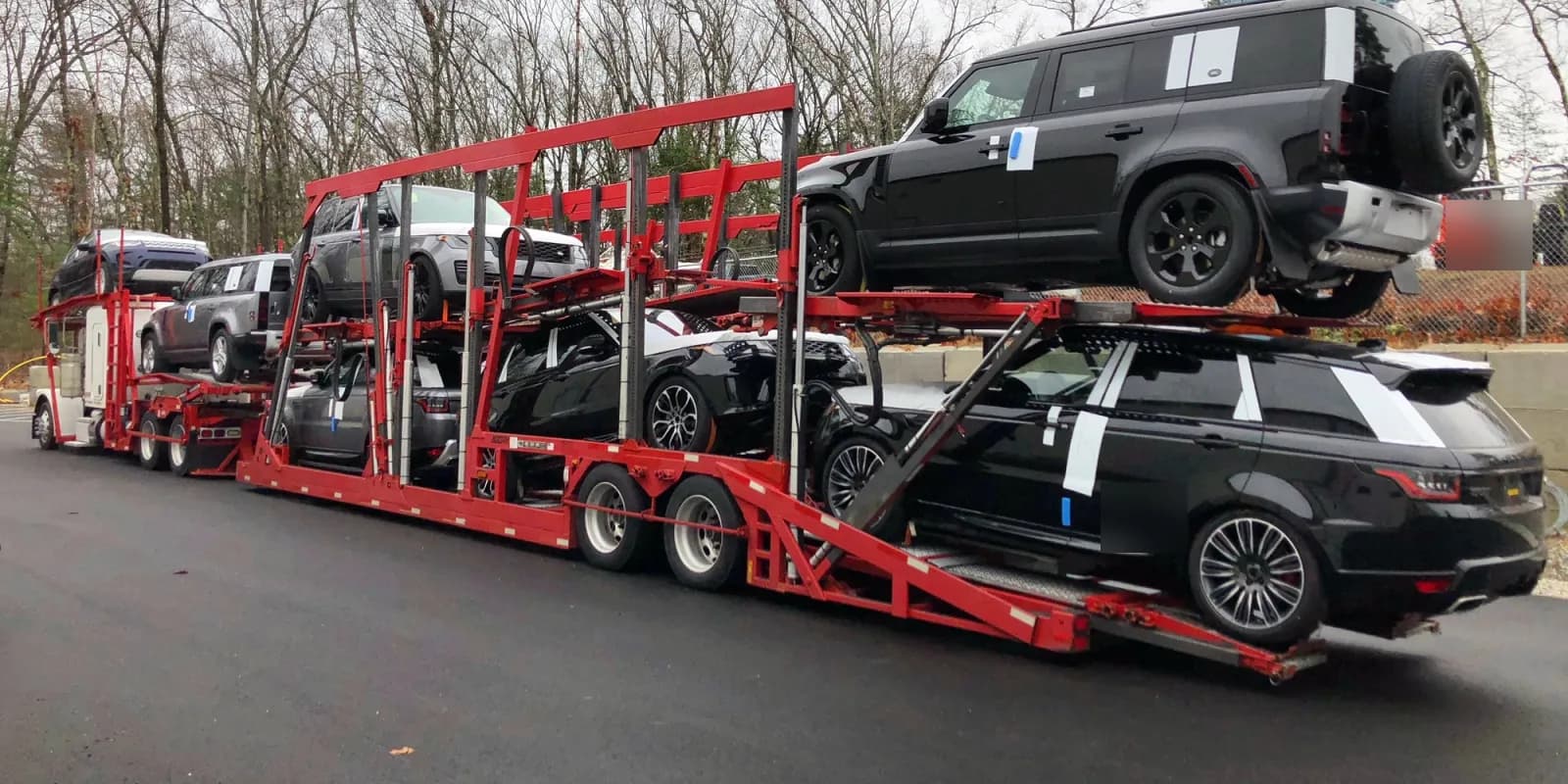
A standard open car carrier holds 7 to 10 vehicles on two decks. When you book one car at a time, each unit is priced as its own trip. When you tell dispatch that three units at one store are headed to the same region, they can ride together and be planned as one load.
The easiest way to do this is to look a few days ahead. Trades and rebalancing moves that aren't urgent can often wait a day or two and share a truck. Urgent trades, where a customer is waiting, can go on priority dispatch.
Auction pickups that don't stall
The clock starts on your floorplan interest the moment the hammer drops, so auction pickups should move as soon as the vehicle clears. A few habits keep them moving:
- Have the gate pass ready. Before a carrier can pick up, the auction must issue a gate pass or release. Without it, the driver is turned away at the gate.
- Send the release details with the order. VIN, lot or stall number, and the gate pass, so the driver doesn't wait on the phone.
- Set standing orders. For example: "Pick up anything with a gate pass from Manheim Framingham every Tuesday and Friday." That removes a booking call for every unit.
- Watch the weekend. Auctions that close Friday can push pickups into weekend premiums. Plan Monday pickups when the car isn't urgent.
We pick up from Manheim, ADESA, Copart, IAA and most independent regional auctions. For more on auction logistics, read auction auto transport.
Ready to Ship Your Vehicle?
Get a free, no-obligation quote from Baier Transport. BBB A+ rated with over 251,015+ vehicles transported.
Or call (603) 490-7309How long dealer trades take
Baier calculates transit the same way on every lane: 400 to 500 miles of driving a day, plus half a day to load at pickup and half a day to unload at delivery, rounded up. For dealer trades that means:
| Trade distance | Transit once loaded |
|---|---|
| About 200 miles | 2 days |
| About 500 miles | 2–3 days |
| About 1,000 miles | 3–4 days |
The wait for pickup is separate. A trade with a flexible window waits for a truck already running the lane; a trade with a waiting customer can go out on priority dispatch. Either way, giving dispatch the exact pickup location, contact and hours at both stores keeps the truck from sitting in the lot.
Non-running units: budget for them
Trade-ins with dead engines, auction units sold as-is, and cars headed to a body shop all need to be loaded with a winch. That takes longer and needs a truck equipped for it, so an inoperable vehicle is priced above a running one. The mistake that costs the most is listing a non-running car as operable. The driver finds out in the first thirty seconds, and the unit either gets loaded at the inoperable rate or doesn't get loaded at all. Mark it inoperable on the order and build the cost into your wholesale numbers.
Paperwork that protects you
Every vehicle should have a condition report at pickup and again at delivery, with photos, and both sides sign the Bill of Lading. That record is your chain of custody. Any damage has to be noted on the Bill of Lading at delivery, not the next morning, so make sure whoever receives cars at your store checks each one before signing.
Ask your carrier for signed proof of delivery on every unit, and keep it with the deal file. When a dispute comes up months later, the paperwork is what settles it.
Track a few numbers
You can't manage transport you don't measure. Four numbers tell you most of what you need to know about a carrier:
- Average transit time by lane, compared with the quoted window
- Damage claims per hundred units moved
- On-time pickup percentage
- Total cost per vehicle moved, including surcharges
Review them every quarter. They make the conversation with your carrier about facts, not feelings.
Check who moves your cars
Before you sign a lane sheet with anyone, look up their operating authority. Any company's USDOT and MC numbers can be checked in the FMCSA SAFER database in about a minute, and the record shows whether the company is registered as a carrier, a broker, or both. You can verify ours on the carrier credentials page.
Get started
If your current transport involves too many phone calls and too many surprises on the invoice, set up a lane sheet. See dealership transport for how dealer accounts work, or request pricing for your lanes.
Ready to Ship Your Vehicle?
Free, no-obligation quote from Baier Transport. BBB A+ rated with over 251,015+ vehicles transported.
Or call (603) 490-7309