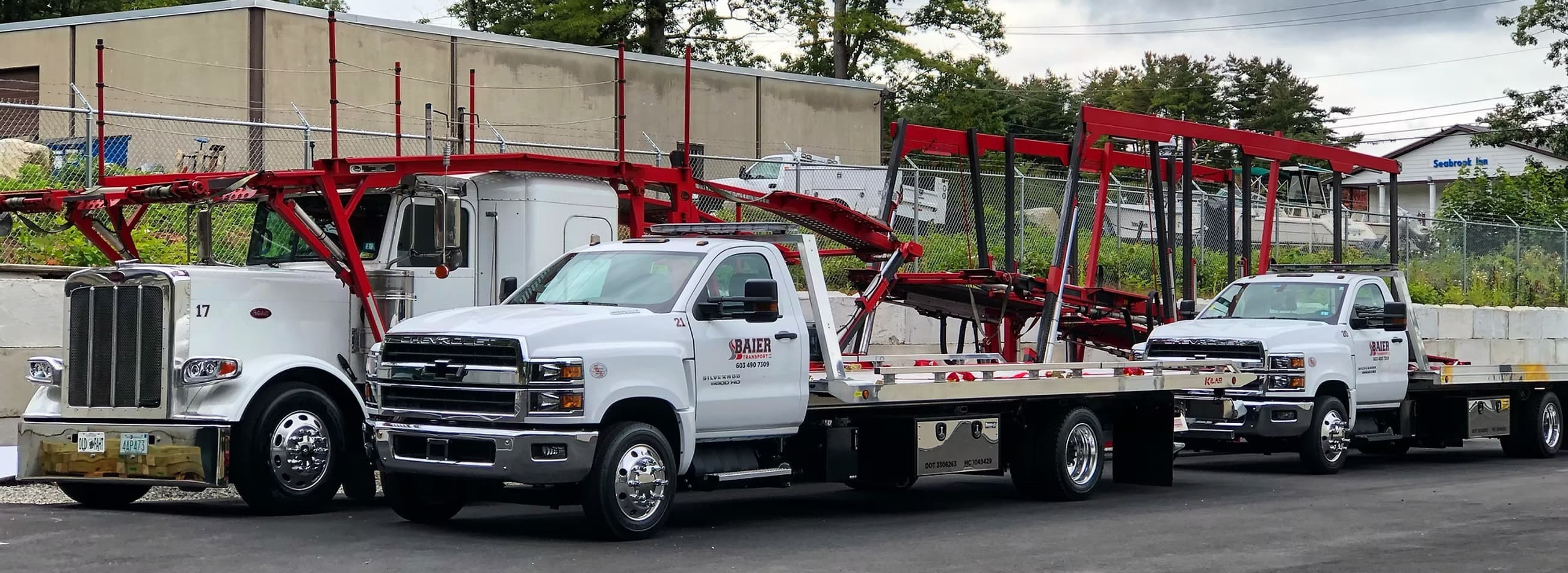
A car carrier is the trailer component of an auto hauler rig, specifically designed to load, secure, and transport multiple passenger vehicles. Car carriers come in several configurations, each suited to different vehicle types, load sizes, and protection levels.
The open car carrier is the most prevalent type in the industry. These trailers feature exposed upper and lower decks with hydraulic lift systems that adjust deck height and angle for loading. A standard open car carrier holds 7 to 10 vehicles. The open design allows for maximum load capacity and faster loading and unloading times. New car dealerships, auction houses, and the majority of individual shippers use open car carriers for their transport needs.
Enclosed car carriers provide complete weather and debris protection using either rigid walls (hard-sided) or heavy-duty fabric curtains (soft-sided). Enclosed trailers typically carry 2 to 6 vehicles due to the additional space occupied by the enclosure walls and the often more careful loading procedures. Many enclosed carriers also feature lift gates rather than drive-on ramps, which can accommodate lower-clearance vehicles like exotic sports cars without risk of scraping.
Wedge car carriers are a specialized open configuration often used for shorter routes and smaller loads. These single-level trailers carry 1 to 4 vehicles and are frequently used by dealerships for local and regional transfers. Their smaller size makes them more maneuverable in tight urban locations and easier to navigate into residential neighborhoods.
Hotshot car carriers use medium-duty trucks (like Ford F-550 or Ram 5500) pulling flatbed or gooseneck trailers. These rigs typically carry 1 to 3 vehicles and are popular for expedited or single-vehicle shipments where speed and flexibility are prioritized over per-vehicle cost efficiency. Hotshot carriers can often pick up and deliver faster than large multi-car carriers because they have fewer stops.