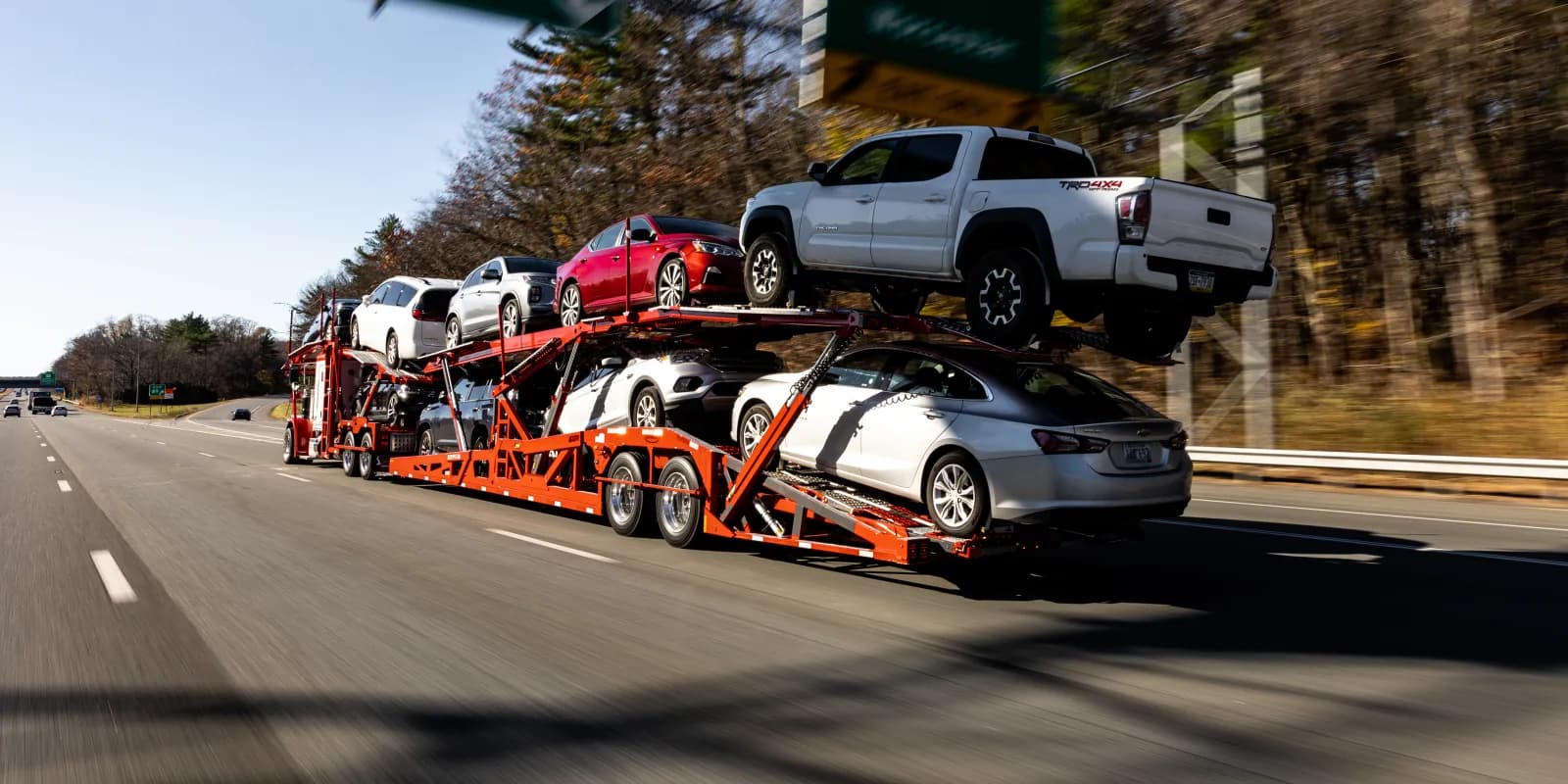
Open car transport is vehicle shipping on an uncovered trailer, where cars ride exposed to weather and road spray. It is the standard method in the industry, moving roughly nine out of ten shipped vehicles, and it costs 40% to 60% less than enclosed — the same trailer type that delivers new cars to dealerships.
A standard open multi-car carrier is a two-level hydraulic trailer that holds 7 to 10 vehicles. Cars drive or winch on, get positioned by the driver to balance axle weight, and are secured with straps over the tires or chains at the tie-down points — nothing touches the paint. Loading order is not random: the driver sequences vehicles by delivery stop, weight, and height, since a tall SUV cannot go under the top deck's low point and a low-clearance sports car cannot use the steep ramp angles at certain positions.
Position matters for exposure. Bottom-deck vehicles sit under other cars and can catch road grime or, rarely, a drip from above; upper-deck positions, sometimes called top load, avoid that and are often sold at a small premium. Real-world exposure over a 1,500-mile run from New England to Florida is road dust, rain, bugs, and highway salt in winter months — cars arrive dirty, and that washes off. Genuine damage from open transport is rare; the exposure people worry about is mostly cosmetic dirt. Typical market pricing for open transport on the Northeast-to-Florida lane runs roughly $900 to $1,600 for an operable sedan, with October through December at the top of the band as snowbird demand peaks.
For a daily driver, a leased vehicle, a commuter car, or the Florida condo car, open transport is the correct answer and enclosed is money you do not need to spend — the car already lives outside, and six days on a trailer is less exposure than a week in your driveway. Open also means availability: far more open trucks run any given lane than enclosed, so pickup windows are shorter and schedules are more flexible.
Where open is the wrong call: paint you cannot replace. Concours cars, low-production exotics, freshly restored classics, and vehicles with ceramic coatings you paid four figures for belong in enclosed transport. One common mistake is paying for enclosed out of anxiety rather than need — the math on a modest crossover does not support a large upcharge to avoid road dust. The other common error is the reverse: shipping a high-value classic open because the quote was cheaper. Ask yourself one question — if this car showed up with a rock chip, would it be a repaint or a restoration? Open transport is what our fleet runs every week between New England and Florida, our trucks and drivers, no load board.