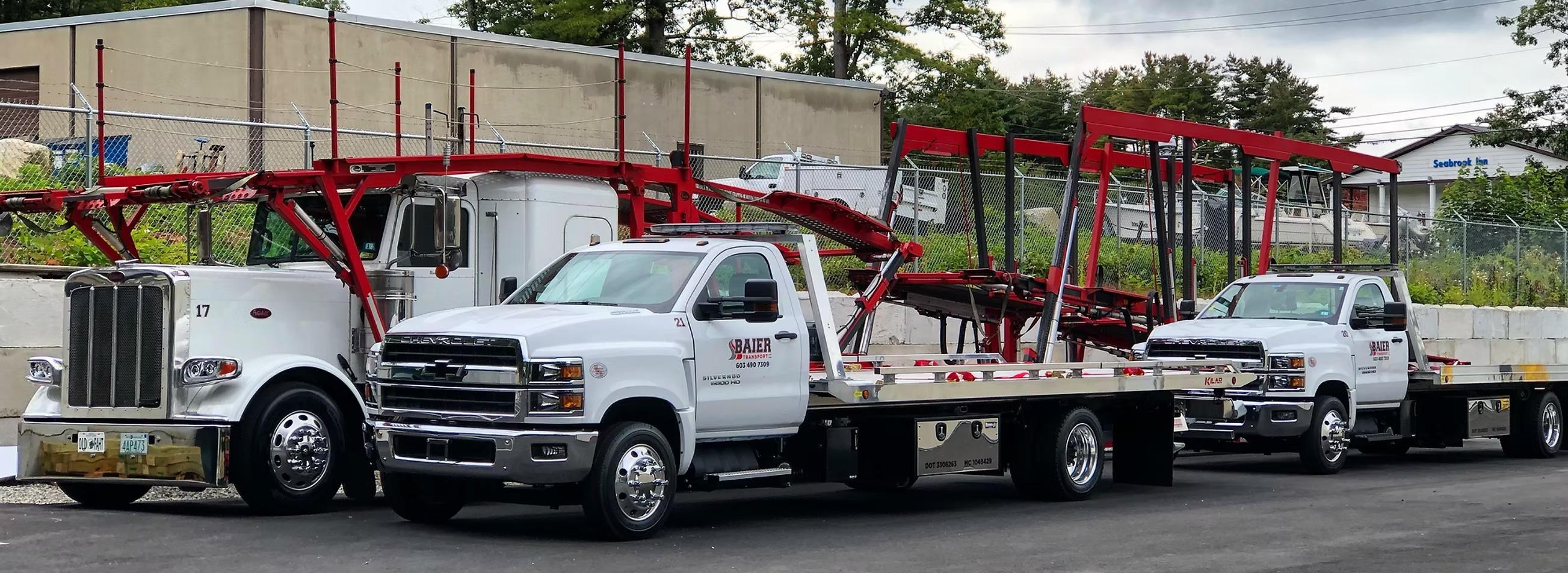
CDL stands for Commercial Driver's License, the license a driver needs to operate large trucks and buses, including the tractor-trailers that haul cars. A CDL driver is a professional driver who holds one. States issue the license, but the testing and medical standards are federal, set by the FMCSA. CDL drivers are the essential workforce of the auto transport industry, responsible for safely loading, transporting, and delivering vehicles across the country.
The Commercial Driver's License is issued by individual states but governed by federal standards set by the FMCSA. To obtain a CDL, drivers must pass written knowledge tests, a skills test including a pre-trip vehicle inspection, basic vehicle control maneuvers, and an on-road driving test. CDL holders must also pass a Department of Transportation (DOT) physical examination and comply with drug and alcohol testing requirements.
There are three CDL classes. Class A covers combination vehicles with a gross combined weight rating (GCWR) of 26,001 pounds or more when the towed unit is over 10,000 pounds. Class B covers single vehicles of 26,001 pounds or more, such as straight trucks and buses. Class C covers smaller vehicles that carry 16 or more people or placarded hazardous materials. Class A is the standard license class for drivers operating semi-trucks pulling multi-car carrier trailers. Most auto hauler drivers hold a Class A CDL.
Auto transport drivers require specialized skills beyond basic CDL competency. Loading and unloading vehicles on a multi-level carrier requires precise low-speed maneuvering, spatial awareness, and familiarity with hydraulic deck systems. Drivers must understand weight distribution principles, securement requirements, and vehicle-specific loading procedures for everything from subcompact cars to heavy-duty trucks.
The quality of CDL drivers directly affects the safety of transported vehicles. Professional auto transport drivers typically have years of experience, clean driving records, and specialized training in vehicle handling. When evaluating a carrier or broker, asking about driver experience and training standards is a reasonable and important part of due diligence. Reputable companies invest in driver training, maintain strict hiring standards, and conduct regular safety audits.