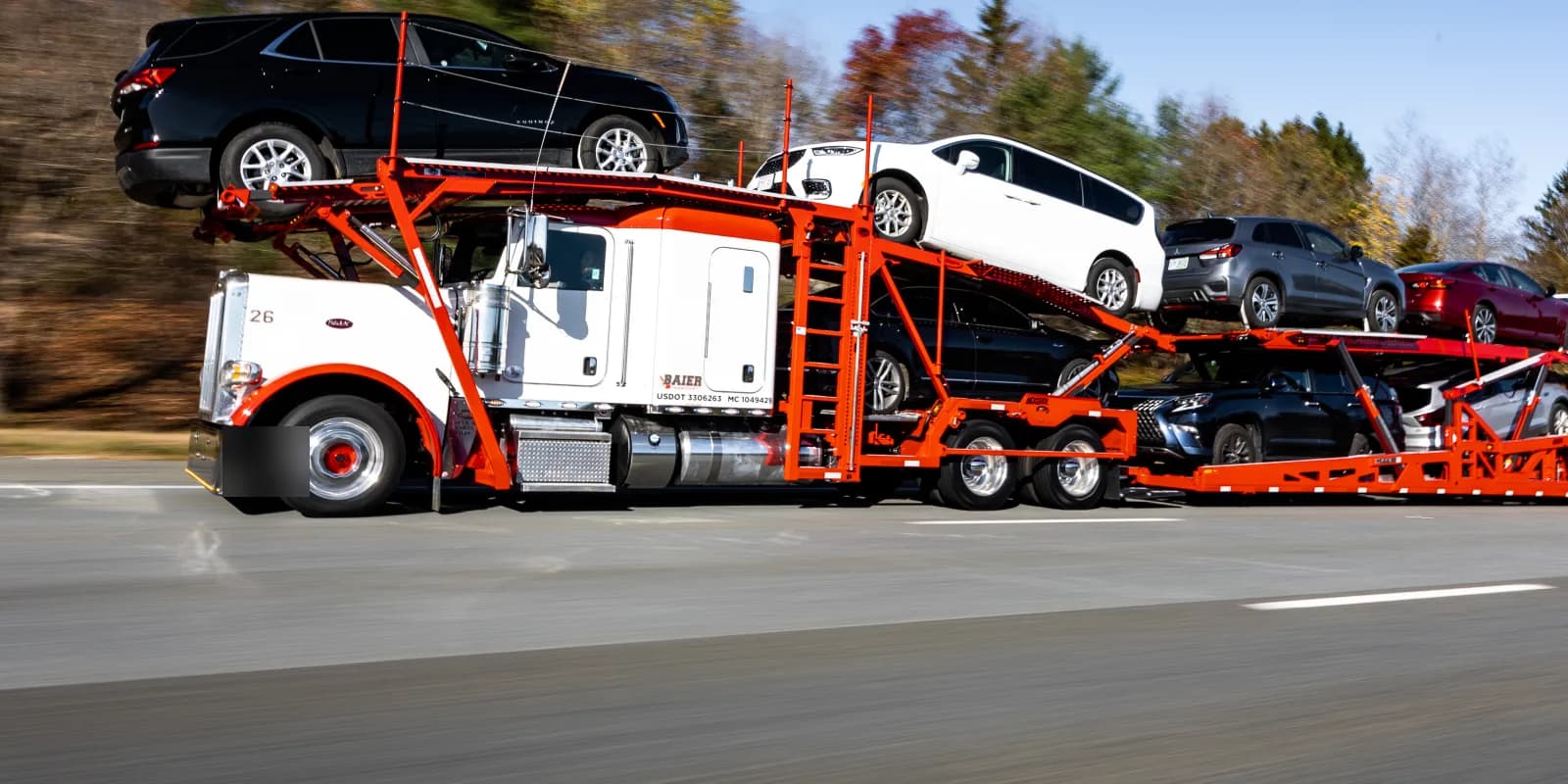
Drive-away service is hiring a professional driver to physically drive your vehicle to its destination instead of loading it on a truck. The car arrives under its own power with the trip's miles on the odometer. It is common for RVs, commercial fleets, and rental repositioning, and far less common for personal cars. A driveaway company assigns a bonded driver who meets you, inspects the vehicle, signs a condition report, and drives it to the destination — usually flying or bussing home afterward. Trips of 1,000 to 1,500 miles typically take 2 to 3 days. The math customers rarely run in advance:
Odometer. Seabrook, NH to Naples, FL is roughly 1,550 miles. That is 1,550 miles added to your car. At $0.20 to $0.30 per mile in depreciation and wear on a typical late-model vehicle, that is $310 to $465 of value gone before you count anything else. On a leased vehicle with a 12,000-mile annual cap and $0.25 per overage mile, it is close to $390 in lease penalties alone.
Consumables. Fuel for 1,550 miles at 25 mpg and current pump prices, tolls down I-95, one or two nights of lodging, plus the driver's return airfare. Depending on the company these may be included in the quote or billed to you. Wear you cannot see. Tires, brake pads, a full oil-change interval, and one more highway trip's worth of stone chips on the front bumper.
Insurance. This is the biggest structural difference. When a car ships on a truck, it is cargo, covered by the carrier's cargo insurance. When a hired driver drives it, it is a vehicle in operation, and coverage depends on the driveaway company's garage liability and non-owned auto policy — and often on your own personal auto policy sitting underneath it. Get that in writing. Ask specifically whether physical damage to your vehicle is covered and at what limit.
Typical driveaway pricing on a long domestic route often lands in the same range as, or above, standard open auto transport once fuel, tolls, lodging, and return travel are included. Ranges vary widely by company and route. Drive-away genuinely wins in a few situations: For a personal vehicle moving from New England to Florida for the winter, shipping is almost always better. Zero miles added, zero wear, no stranger with your keys for three days, and cargo insurance rather than an insurance conversation. Comparing a driveaway quote to a shipping quote as if the numbers are equivalent. They are not. Add depreciation on 1,500 miles, lease overage if applicable, fuel, tolls, lodging, and the driver's flight home to the driveaway number before you compare. Most of the time the "cheaper" option stops being cheaper.
The second mistake is skipping the insurance question. Confirm in writing who insures the vehicle in motion, what the physical-damage limit is, and whether your personal policy is expected to respond first. If the company will not put it in writing, that is your answer — the same rule that anchors our 9-point checklist. Before you hire someone to put 1,500 miles on your car, see what a slot on one of our southbound trucks costs. Get a quote or read what it costs to ship a car in 2026.