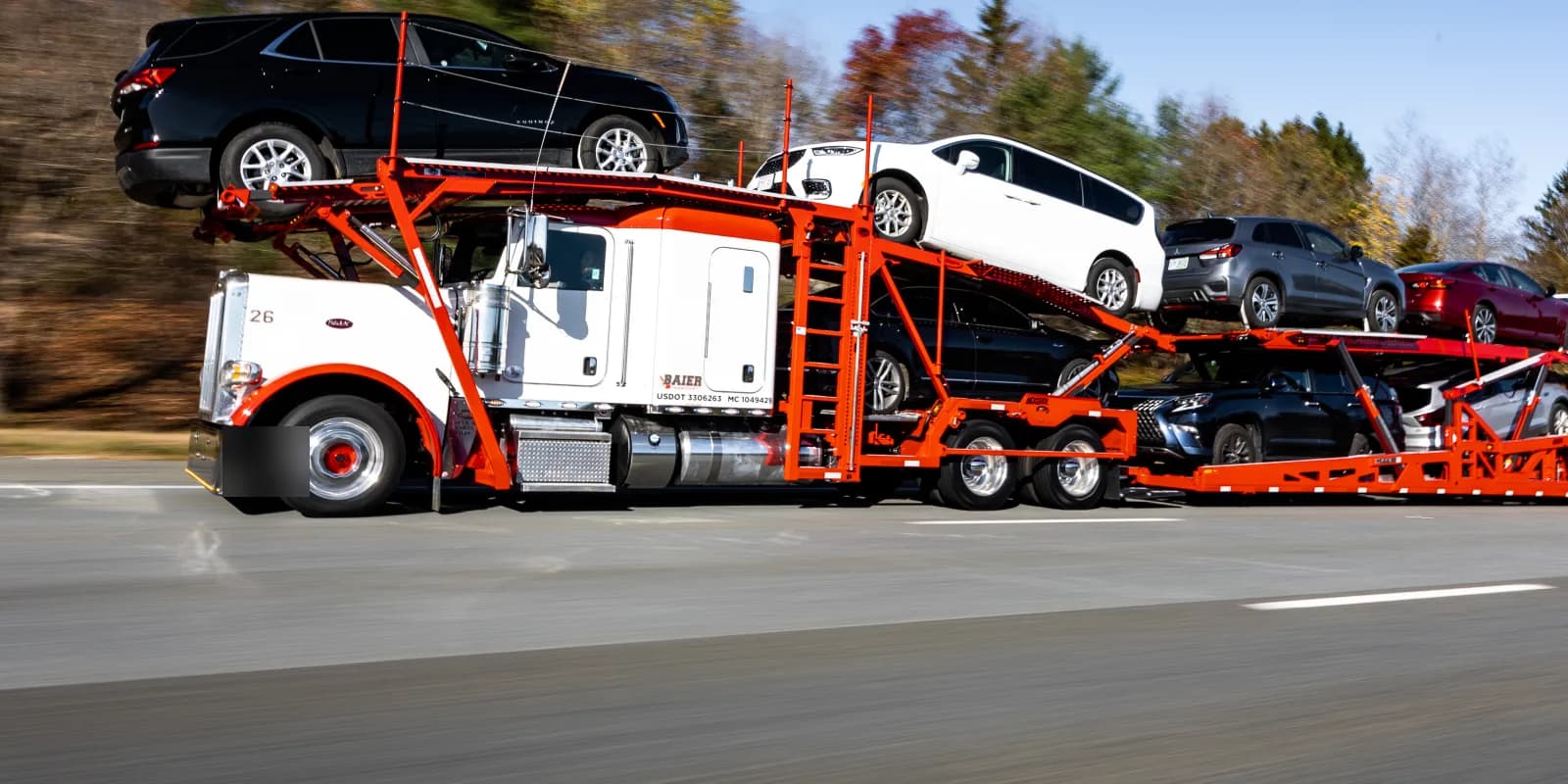
Terminal-to-terminal transport is auto shipping where you drop your vehicle at a designated lot or facility and collect it from another lot near the destination, instead of the truck coming to your address. It trades convenience for scheduling flexibility, and it can add storage fees. Most consumer shipments today use door-to-door instead.
A terminal is a secured lot — sometimes a carrier's own yard, more often a third-party storage facility, a body shop, a tow yard, or an auction overflow lot that rents space. You drive to the origin terminal during business hours and hand over the keys; staff at the lot completes the Vehicle Inspection Report; your car sits until a truck heading your direction has room, which may be same-day or a week; it ships, arrives at the destination terminal, and sits again until you retrieve it with photo ID and release paperwork.
Two things people underestimate: storage fees, since most terminals give a grace period of 2 to 7 days then charge roughly $20 to $50 per day, and the fact that two inspection handoffs become four. Door-to-door has two inspections, both with the driver who is responsible for the car; terminal service adds lot staff at both ends, and every extra handoff is an extra place where a scuff can appear with nobody able to say when.
Terminal locations are also concentrated. Boston, New York, Miami, Orlando, and Tampa have plenty; New Hampshire's Seacoast, Maine, and Southwest Florida have very few, so "terminal-to-terminal" from Portsmouth to Naples may mean driving 60 miles each way on both ends.
For the typical snowbird moving one car from New Hampshire to Fort Myers, door-to-door is faster, involves fewer hands, and usually costs about the same or less once you count storage and rides. One mistake worth naming: choosing terminal-to-terminal because a quote came back $75 cheaper, then paying $180 in storage and $90 in rideshare fares — price the whole trip, not the line item. Before booking terminal service, ask exactly where both terminals are, how many free days you get, and what the daily rate is after that; if the company cannot answer specifically, they do not actually know which lot your car is going to. We run door-to-door out of Seabrook, New Hampshire with our own trucks, and we will tell you plainly if terminal service is the better fit for your dates.