Open vs Enclosed Auto Transport: Which Is Right for Your Vehicle?
When you request an auto transport quote, one of the first choices you will face is whether to ship on an open carrier or in an enclosed trailer. Both methods are safe and professional, but they serve different needs and come at different price points.
What Is Open Auto Transport?
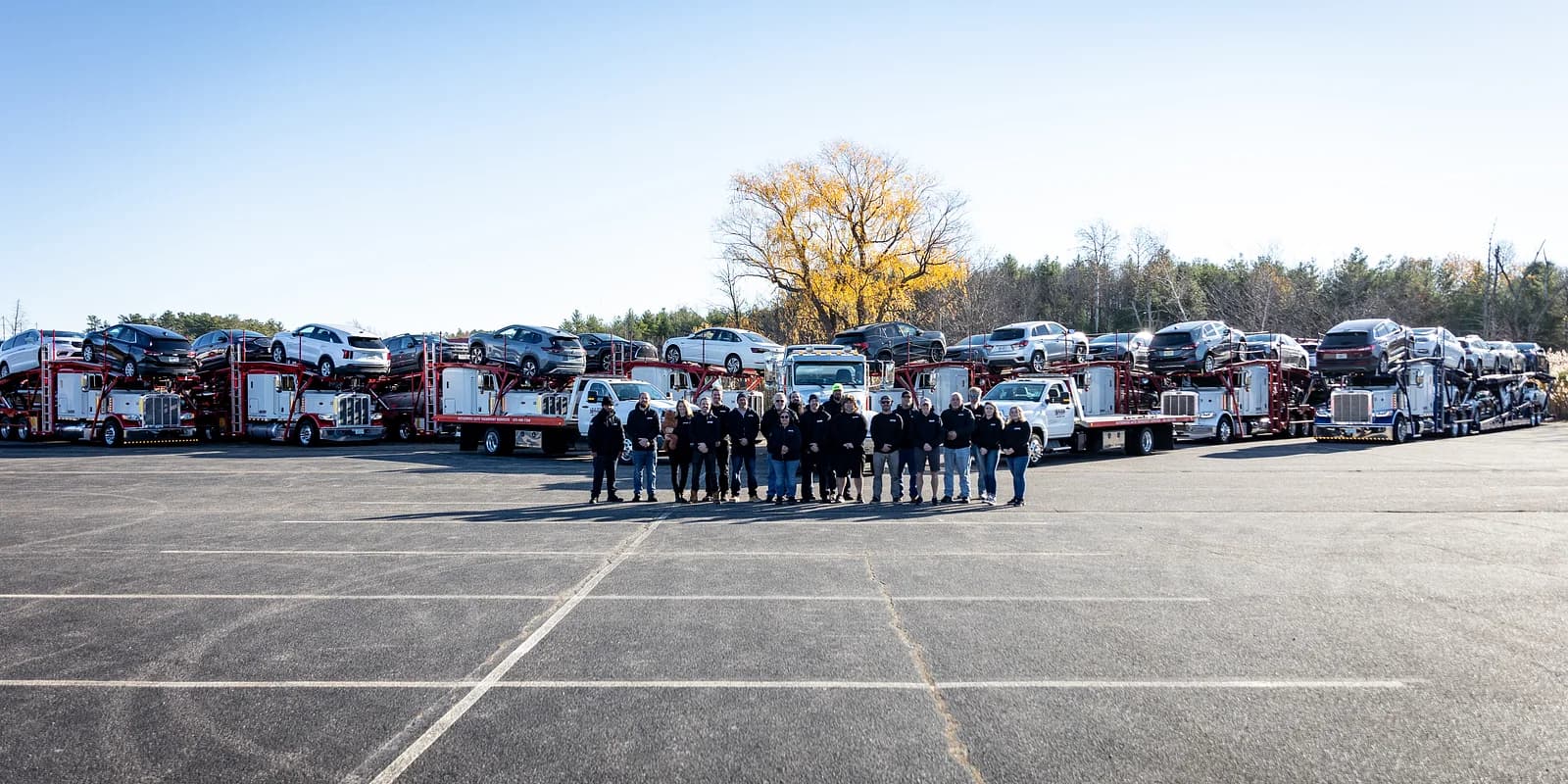
Open transport is the industry standard. Your vehicle is loaded onto a multi-car carrier — the same trucks you see on highways carrying new cars from factories to dealerships. A typical open carrier holds 7–10 vehicles on two levels.
Open transport accounts for roughly 90% of all auto transport in the United States. Every major automaker uses open carriers to deliver brand-new vehicles worth $30,000, $50,000, or more. If it is safe enough for a new BMW off the production line, it is safe enough for most vehicles.
Pros:
- Lower cost — 30–60% less than enclosed for the same route
- Greater availability — easier scheduling, faster pickup times
- Proven safety record — millions of vehicles shipped annually with very low damage rates
Cons:
- Exposed to weather, road dust, and minor debris during transit
- Visible to the public (irrelevant for most, matters for rare/high-value vehicles)
What Is Enclosed Auto Transport?
Enclosed transport uses a fully covered trailer — hard-sided (metal) or soft-sided (heavy-duty canvas/tarp). Enclosed carriers typically hold 2–6 vehicles.
Your vehicle is completely shielded from weather, road debris, UV exposure, and public view throughout the journey.
Pros:
- Maximum protection — shielded from rain, snow, hail, road salt, gravel, and all environmental hazards
- Weather-sealed enclosure — hard-side trailers shield sensitive finishes from rain, snow, UV, and road salt
- Discretion — high-value vehicles and collectibles are not visible during transit
- Lowest risk of cosmetic damage — even minor paint chips from road debris are virtually eliminated
Cons:
- Higher cost — 30–60% more than open transport
- Less availability — fewer carriers, potentially longer wait times
- Smaller capacity — each vehicle bears a larger share of operating costs
Cost Comparison: Open vs. Enclosed (2026)
| Route | Distance | Open Transport | Enclosed Transport |
|---|---|---|---|
| Boston → Washington, D.C. | ~500 mi | $500–$750 | $750–$1,100 |
| New Hampshire → Florida | ~1,200 mi | $900–$1,200 | $1,300–$1,800 |
| Coast to coast | ~2,500 mi | $1,100–$1,600 | $1,700–$2,500 |
Whether the enclosed premium is justified depends entirely on the vehicle you are shipping and your personal comfort level. See our complete cost guide for detailed pricing by distance.
When to Choose Enclosed Transport
Enclosed transport is worth the additional investment for:
- Classic and vintage vehicles — a restored 1967 Mustang or numbers-matching Corvette deserves the highest protection. Even minor cosmetic damage can significantly affect value.
- Exotic and supercar shipments — Ferraris, Lamborghinis, McLarens. The cost of enclosed transport is a fraction of the vehicle's value.
- Luxury vehicles with sensitive finishes — matte paint, ceramic coatings, or finishes more susceptible to debris damage.
- Vehicles being shipped for sale — arriving in pristine condition protects the transaction for dealers and collectors alike.
- Show cars and competition vehicles — anything going to or from a car show, concours, or competition needs to arrive flawless.
- Personal preference — some owners simply want maximum protection regardless of vehicle value.
When to Choose Open Transport
Open transport is appropriate — and recommended — for the vast majority of vehicle shipments:
- Daily drivers — your commuter car, family SUV, or pickup truck handles weather and road conditions every day. A few days on an open carrier is no different.
- Newer vehicles in regular use — a 2024 Toyota Camry or Honda CR-V does not need enclosed protection.
- Budget-conscious shipments — open transport delivers your vehicle safely at a significantly lower price point.
- Time-sensitive moves — more carriers available means faster pickup dates.
Making Your Decision
The choice comes down to three factors:
- Value and condition of your vehicle
- Your budget
- Your personal comfort level
For most people shipping most vehicles, open transport is the smart, safe, economical choice. For high-value, collectible, or irreplaceable vehicles, enclosed transport provides protection well worth the premium.
Not sure? Our team can help you determine the right option for your specific vehicle. Learn more about what affects your shipping cost and the best time to book.
Get a Free Quote
At Baier Transport, we operate both open and enclosed carriers. BBB A+ rated with 251,015+ vehicles transported. Verify our carrier credentials and FMCSA operating authority.
Get a Free Quote → | Call (603) 490-7309 | Contact Us →
New to auto transport? Start with How Auto Transport Works: 5-Step Guide →
Ready to Ship Your Vehicle?
Free, no-obligation quote from Baier Transport. BBB A+ rated with over 251,015+ vehicles transported.
Or call (603) 490-7309