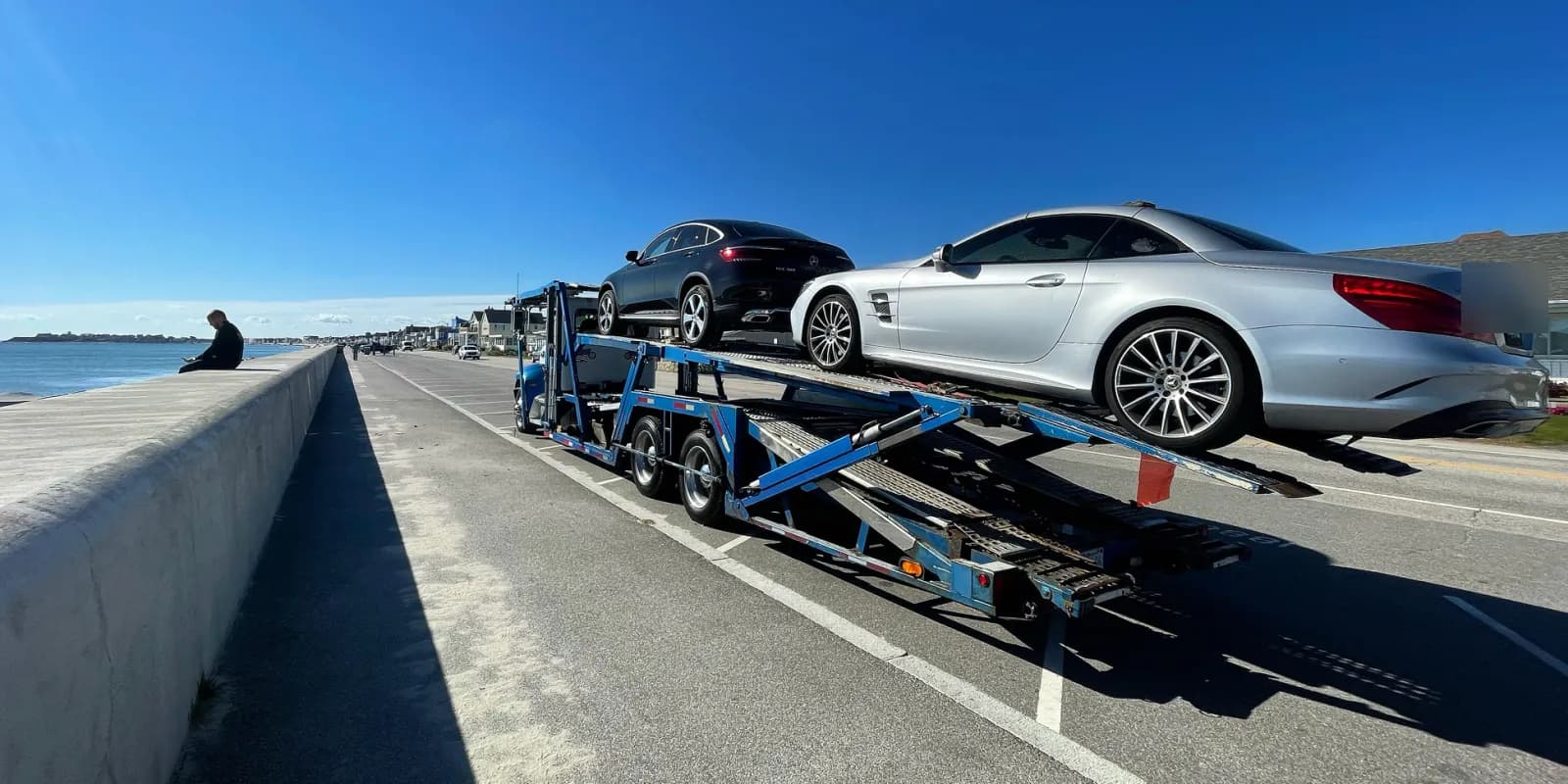
Snowbird car shipping is the seasonal transport of vehicles belonging to part-year residents who move from cold northern states to Florida and the Sun Belt for the winter, then back in spring. It is the single largest seasonal migration in auto transport, peaking southbound October through January and reversing March through May.
Southbound routes run out of New Hampshire, Massachusetts, Maine, New York, New Jersey, and Connecticut down I-95 to Miami, Fort Lauderdale, West Palm, Orlando, Tampa, Sarasota, Fort Myers, and Naples — roughly 1,300 to 1,600 miles from the New Hampshire Seacoast, meaning 3 to 5 days on the road once loaded. Prices climb in the fall because trucks run full southbound and empty northbound, and every carrier has to price the return deadhead into the rate; in spring the imbalance reverses. Carriers that run both directions absorb that better than a broker chasing one-way loads.
Typical market ranges on the Northeast-to-Florida corridor run roughly $900 to $1,600 for an operable sedan on an open trailer, with October and November at the top of the band and February at the bottom, and enclosed running 40% to 60% higher. Nearly all snowbird shipments are door-to-door, which matters because many Florida destinations are gated communities — ask your HOA before booking whether commercial trucks can enter.
Snowbirds have a constraint most shippers do not: a flight. You need the car in Naples the week you land, not sometime in the next two weeks, which makes the first available date and the pickup window far more important than saving a small amount on price. The scheduling insight that saves people the most money is shipping the car ahead of yourself — send it in late September or early October, fly down in November, and you get the shoulder-season rate and a short pickup window instead of competing with everyone else in the first week of November. Round-trip matters too: a carrier that runs both legs can schedule your spring return at booking, while most brokers cannot and will quote you again in March at whatever the market has become.
The most expensive mistake is waiting until three weeks before departure. By mid-October the Northeast-to-Florida lane is the most demand-heavy corridor in American auto transport, and booking late means paying peak rates for the worst pickup windows or an expedited premium on top. A second mistake is booking a cheap broker quote in August and assuming it holds — if no carrier accepts that price in October, the quote often gets "revised" the week you needed it. We run this corridor with our own trucks out of Seabrook, New Hampshire — 251,015+ vehicles moved, BBB A+ rated, not a load board.